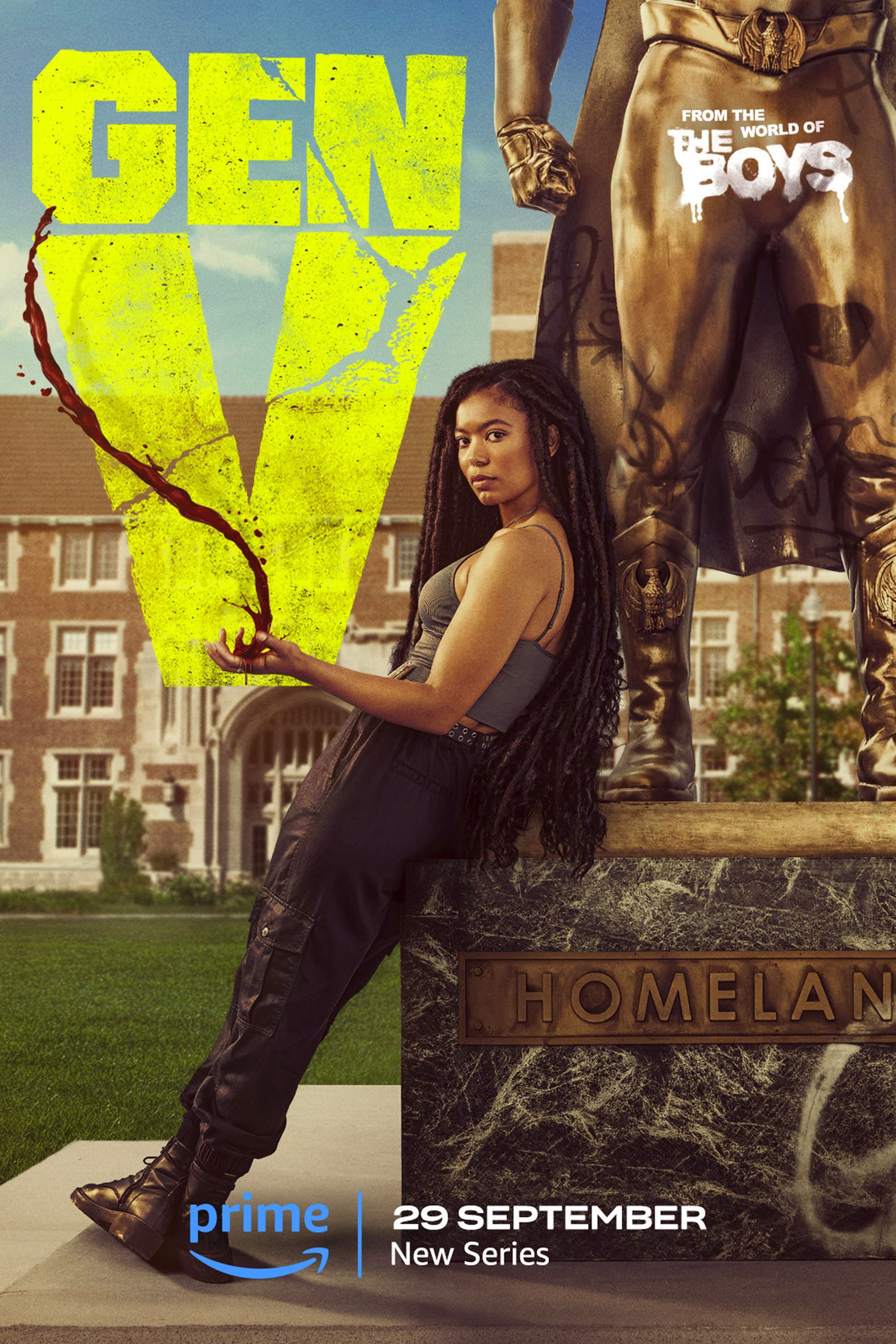
Figuring out the exact spot in the timeline can be a bit of a headache with franchise universes. Honestly, if you're trying to pin down when does Gen V take place, you aren't just looking for a year on a calendar. You're looking for how it fits into the messy, blood-soaked jigsaw puzzle that is The Boys universe.
It matters.
The events at Godolkin University aren't just a side quest; they are a direct bridge. If you haven't watched Season 3 of the main show, stop. Seriously. The context of the "temp-V" fallout and the public's shifting perception of Homelander is the literal foundation of this spinoff.
The Short Answer: It’s Between Seasons 3 and 4
So, let's get the specific placement out of the way first. Gen V Season 1 takes place concurrently with and immediately following the events of The Boys Season 3. Specifically, the show starts just a few months after the Season 3 finale. Think back to that chilling final shot of Homelander lasering a protester’s head off while his son, Ryan, smirks. That moment changed everything. By the time Marie Moreau walks onto the Godolkin campus, the world is still reeling from that public execution.
The show roughly covers the fall semester of the academic year. As you watch the students deal with "The Woods" and their own rising powers, you’re basically watching the preamble to The Boys Season 4. In fact, the finale of Gen V leads directly into the opening episodes of Season 4.
Why the Supe-Virus Changes Everything
You can't talk about the timeline without talking about the virus. This is the biggest piece of connective tissue. In Gen V, we see the development of a pathogen designed to kill Supes. This isn't just a plot point for the kids; it becomes the primary MacGuffin for the adults later on.
When Billy Butcher shows up in that post-credits scene—poking around the ruins of The Woods with a flashlight—that’s the moment the timelines officially fuse. It confirms that the discovery of the virus happened before the main crew started their Season 4 mission.
It’s a tight window.
The timeline works like this:
- The Boys Season 3 Finale: Homelander kills a civilian.
- Gen V Episode 1: Marie arrives at Godolkin; the school is dealing with the PR fallout of the "Seven" having vacancies.
- Gen V Mid-season: References to Victoria Neuman’s campaign are everywhere.
- Gen V Finale: The school massacre happens, and Homelander arrives to "save the day" (or make it worse).
- The Boys Season 4: Picks up almost exactly where that chaos left off.
Real-World Context and Cameos
The show uses cameos to anchor us. Seeing Ashley Barrett screaming at university administrators or A-Train making a brief appearance reminds us that the Vought corporate machine is running at full throttle.
These aren't just "hey, I know that guy" moments. They serve as chronological markers. For example, when we see Victoria Neuman, she’s in the heat of a vice-presidential campaign. This aligns perfectly with the political arc we see in the main series. If Gen V happened any earlier, she wouldn't be that close to the White House. If it happened later, the "Starlight House" vs. "Homelander" social divide would look different.
Dealing With the "Golden Boy" Problem
Luke Riordan, aka Golden Boy, was supposed to be the next big thing for the Seven. His death in the first episode is the catalyst for the entire series. But why does his death matter for the timeline?
Because the Seven are at their weakest point. Starlight has quit. Queen Maeve is "dead" (in hiding). Black Noir is... well, you know. Vought is desperate for fresh meat. This desperation is what drives the plot of Gen V. The university isn't just a school; it's a farm system for a pro league that has lost its star players.
If this were set during Season 1 or 2 of The Boys, the stakes wouldn't feel so high because the Seven were still a "stable" unit. By placing it after Season 3, the show captures a Vought that is truly cornered and dangerous.
A Quick Note on the "Year"
While the show doesn't often flash a "2024" or "2025" on the screen, we can infer the timing based on the technology and the cultural references. The social media landscape in the show mimics our own current reality—TikTok clones, viral outrage, and the rapid-fire news cycle.
Basically, the show exists in a "perpetual now." It’s our world, just with more capes and significantly more exploding limbs.
The Impact on Future Seasons
Knowing when does Gen V take place helps you understand why the ending is so bleak. Marie and her friends aren't just "missing"—they are being erased from the narrative by the very people they tried to help.
This sets up a very specific dynamic for The Boys Season 4 and the eventually upcoming Gen V Season 2. The kids are now "terrorists" in the eyes of the public, and Homelander has successfully co-opted the Godolkin narrative to support his Supe-supremacist agenda.
It’s a clever bit of writing. By the time you finish the season, you realize you haven't just watched a spinoff. You’ve watched the origin story of the weapon that might finally take down the strongest man in the world.
How to Watch It for Maximum Clarity
If you’re a completionist, the order is non-negotiable.
- Watch The Boys Seasons 1 through 3.
- Watch Gen V Season 1.
- Watch The Boys Season 4.
If you skip Gen V and jump straight into Season 4, you’re going to be very confused when people start talking about a Supe-killing virus or why certain characters show up in the finale. The narrative hand-off is seamless, but it requires you to pay attention to the details.
The timeline is tight, the stakes are massive, and the crossover potential is only going to grow from here. Vought doesn't do anything by accident, and neither do the showrunners. Every "missing" month in the timeline is filled with something that eventually bites the characters in the back.
Actionable Steps for Fans
- Re-watch the Gen V Finale post-credits: Look closely at what Butcher finds. It’s the direct link to his motivations in the following season.
- Track the Neuman campaign: Her appearances in both shows are the best way to calibrate exactly how much time has passed between episodes.
- Pay attention to the news tickers: The scrolls at the bottom of Vought News Network (VNN) segments often reference events from the other show that haven't happened on screen yet.
The timeline is a loop. Once you see how the Godolkin massacre feeds into Homelander’s legal defense and public image, the events of the main series carry much more weight. You aren't just watching a show about college kids; you're watching the gears of a fascist takeover turning in real-time.