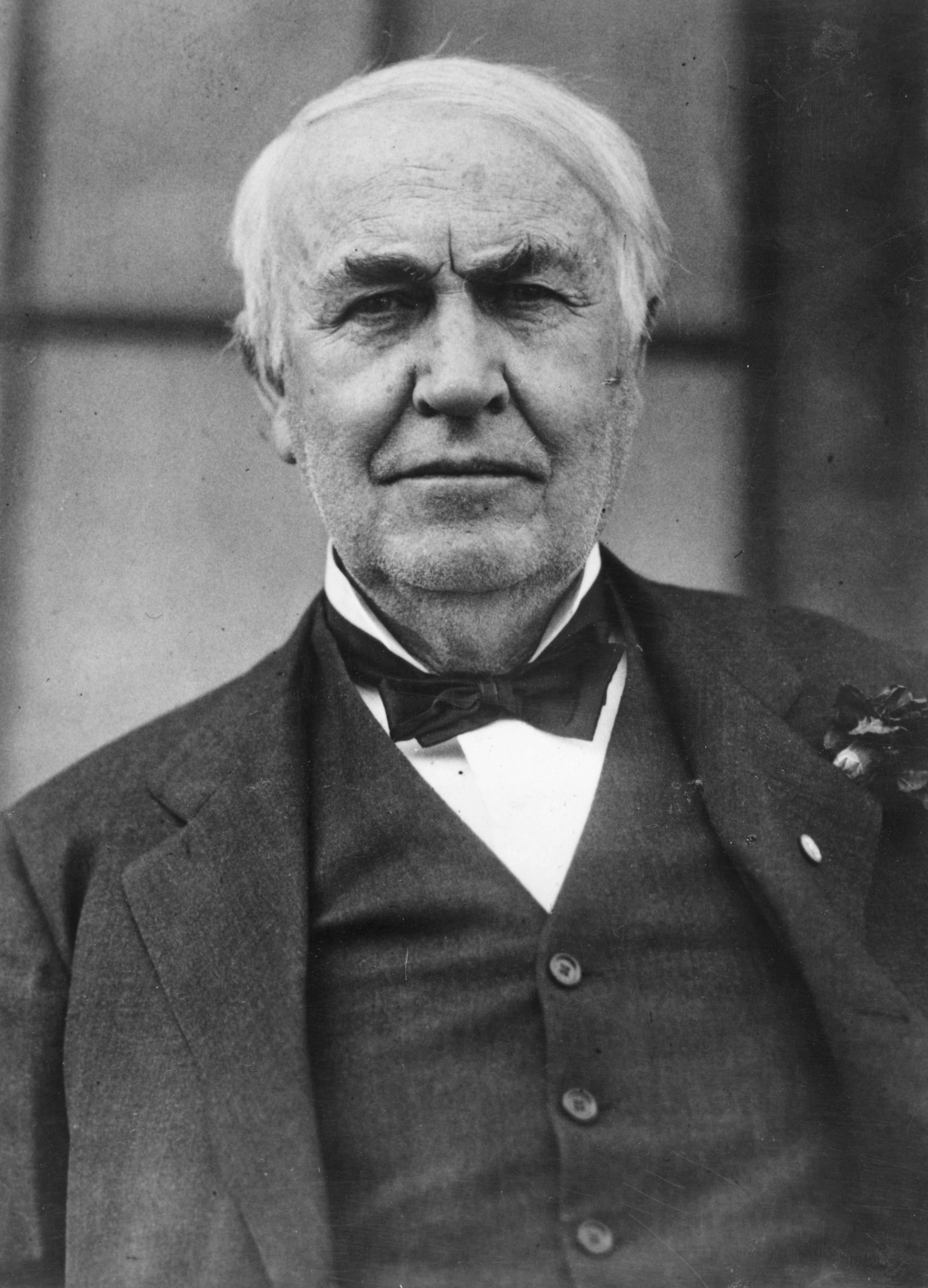
When you think about the man who literally lit up the world, you probably imagine a lab. You think of the Menlo Park "Wizard" hunched over a glass bulb or tinkering with a phonograph. But the reality of his end was much quieter, tucked away in a massive red brick and wood-shingled mansion in a gated community in New Jersey. So, where did Thomas Edison die? He passed away in his beloved home, Glenmont, located in Llewellyn Park, West Orange.
It wasn't a sudden shock. Edison was 84. By 1931, the sheer momentum of a man who held 1,093 patents was finally slowing down. He’d been dealing with a cocktail of health issues—diabetes, uremia, and Bright’s disease—that eventually made it impossible for him to keep up his legendary twenty-hour workdays.
The Scene at Glenmont in October 1931
The world was watching that week. Reporters literally camped outside the gates of Llewellyn Park. It's wild to think about now, but the public's obsession with Edison’s health was like the modern-day coverage of a tech mogul or a rock star. People wanted to know if the light was truly going out.
Inside the house, things were solemn. His second wife, Mina Miller Edison, was there, along with his children. Dr. Hubert S. Howe was the physician in charge, and he became the unofficial spokesperson for the vigil. Honestly, the tension must have been suffocating. For days, the bulletins coming out of the house were grim. "The patient is sleeping," or "Mr. Edison is sinking."
He finally breathed his last at 3:24 a.m. on October 18, 1931.
Why does the location matter? Because Glenmont wasn't just a house. It was a 29-room Queen Anne-style estate that Edison bought in 1886 as a wedding gift for Mina. It represented his transition from a scrappy inventor to a wealthy, established captain of industry. If you visit today—it's part of the Thomas Edison National Historical Park—you can see the very room where he died. It’s heavy with history. The furniture is original. You can almost smell the old wood and the weight of the Victorian era.
The "Last Breath" Myth and the Ford Connection
You might have heard the creepy story about Henry Ford and a test tube. It sounds like something out of a sci-fi movie or a weird urban legend. People claim that as Edison was dying at Glenmont, his son Charles captured his final breath in a glass tube and gave it to Henry Ford.
Is it true? Kinda.
Charles Edison actually noticed a rack of test tubes sitting near his father’s bed. After Thomas passed, Charles asked the attending physician to seal the tubes with paraffin. He gave one to Ford. Why? Because Ford idolized Edison. He thought Edison was the greatest mind of the century and wanted a physical memento of his spirit. That tube is now on display at the Henry Ford Museum in Dearborn, Michigan. It’s a bit macabre, sure, but it shows the level of reverence people had for the man.
What the Doctors Said: The Medical Reality
Let's get clinical for a second because people often gloss over what actually happens to an 84-year-old body in 1931. Dr. Howe's reports mentioned uremic poisoning. Basically, Edison’s kidneys were failing. When the kidneys stop filtering waste, those toxins build up in the blood. It leads to a slow, drifting loss of consciousness.
Edison had spent years living on a diet that would make a modern nutritionist scream. He was famous for his "milk diet" toward the end, where he drank almost nothing but milk every few hours. He thought it would solve his digestive issues. It didn't.
Why West Orange Became the Center of the Edison Universe
While he’s often associated with Menlo Park (where the lightbulb was perfected), West Orange was where he spent the bulk of his life. He built a massive laboratory complex just down the hill from Glenmont. This was the first true R&D facility in the world.
When we talk about where did Thomas Edison die, we aren't just talking about a bedroom. We're talking about a man dying in the heart of the empire he built. He could look out his window and see the factories that churned out his storage batteries and phonographs. It was a total immersion in his own legacy.
The Lights Went Out... Sort Of
After he died at Glenmont, there was a proposal to turn off all the electricity in the United States for one minute in tribute. Think about the logistics of that for a second. It would have been a disaster—hospitals, traffic lights (primitive as they were), and factories would have gone dark.
Instead, at 9:59 p.m. Eastern Time on October 21, 1931—the day of his funeral—President Herbert Hoover asked Americans to dim their lights. It was a compromise. Even the Statue of Liberty went dark. It was a staggering visual: the world voluntarily returning to the darkness Edison had spent his life trying to banish.
Common Misconceptions About Edison's Passing
- He didn't die in Florida. While he had a famous winter home in Fort Myers (right next to Henry Ford's place), he was at his primary New Jersey residence when the end came.
- He wasn't working on a "ghost machine." There’s a persistent myth that Edison was trying to build a device to talk to the dead in his final days. While he did once mention in an interview that a sensitive instrument might theoretically detect "life units," there is zero evidence he was actually building a "spirit phone" at Glenmont before he died.
- He wasn't alone. Unlike some eccentric inventors who die in isolation, Edison was surrounded by family and the best medical care of the era.
Visiting the Site Today
If you actually want to see the place, the National Park Service runs the Thomas Edison National Historical Park. You can tour the West Orange labs and then take a shuttle or drive up to Llewellyn Park to see Glenmont.
The estate is surprisingly intact. You see the library with its thousands of books, the dining room where he hosted world leaders, and the upstairs bedrooms. He and Mina are actually buried on the grounds. Their graves are in a simple, gated plot behind the house. It's a stark contrast to the massive monuments you'd expect for a man of his stature. Just a couple of granite slabs in the grass.
How to Explore the Edison Legacy Yourself
If you’re a history buff or just curious about how the modern world was built, you shouldn't just read about it.
- Visit West Orange: See the chemical labs and the "Black Maria" (the first movie studio).
- Check out the Henry Ford Museum: If you're near Detroit, go see that weird test tube of breath. It’s an incredible piece of Americana.
- Read his journals: The Rutgers University "Edison Papers" project has digitized thousands of his notes. You can see his handwriting and his thought process.
Thomas Edison's death at Glenmont marked the end of the "Age of the Heroic Inventor." After him, innovation became a corporate, team-based sport. But for those final days in New Jersey, the world stood still for one man who didn't just invent things—he invented the way we live now.
To truly understand his impact, look at the device you're reading this on. Its battery, its screen, and the very grid that powers it all have DNA that traces back to the man who took his last breath in a quiet bedroom in West Orange.
Actionable Next Steps
- Plan a Trip: If you're in the Tri-State area, book a tour of Glenmont in advance. The National Park Service limits the number of people who can go inside the mansion to preserve the floors and furniture.
- Digital Archive: Spend 20 minutes on the Edison Papers website. Look for his sketches from the 1920s; it's fascinating to see an aging genius still trying to solve problems like domestic rubber production.
- Documentary Watch: Check out the PBS American Experience documentary on Edison. It provides great visual context of the West Orange labs during his final years.