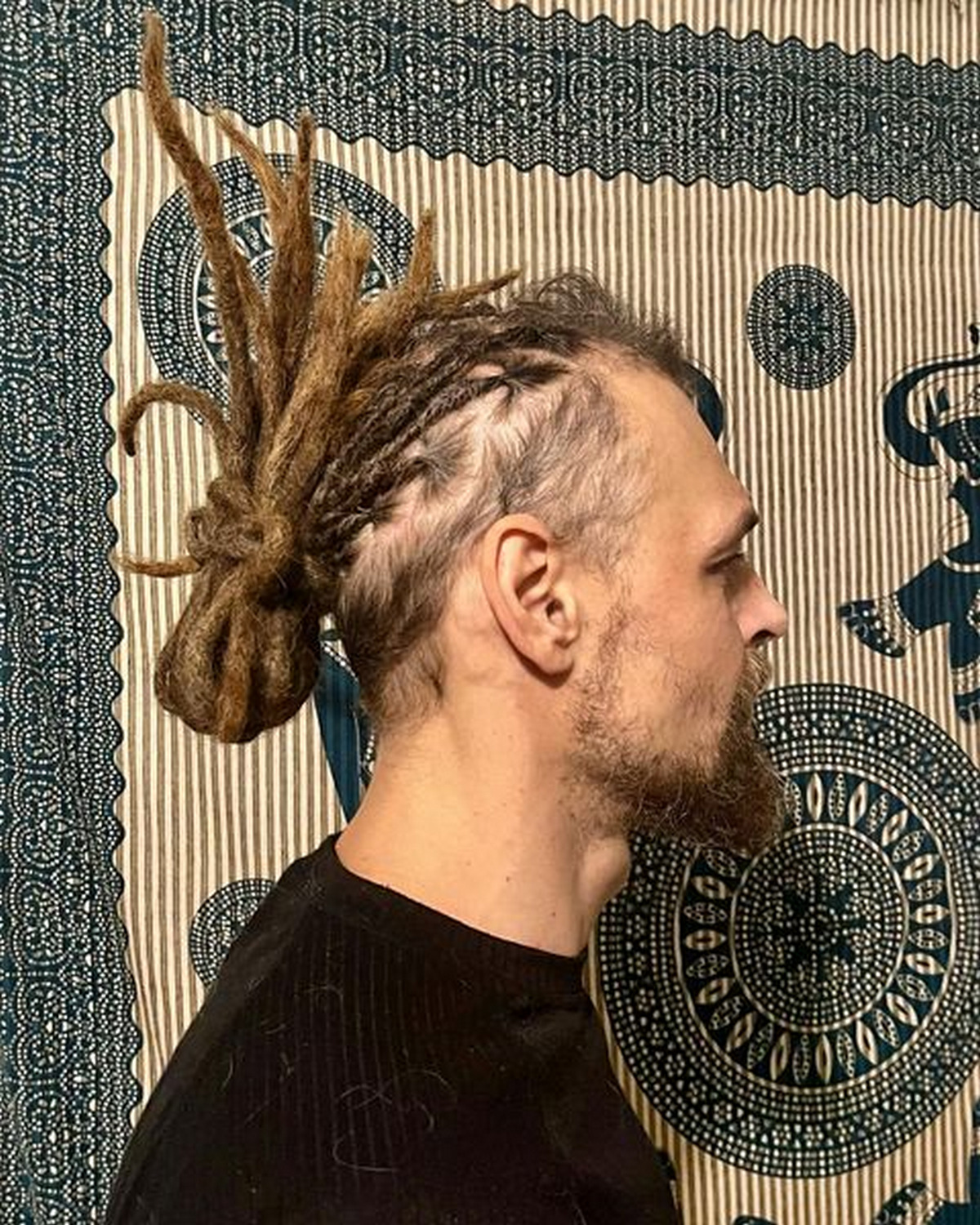
You see it at music festivals, in local coffee shops, and all over social media. A white man with dreads walks by, and honestly, the reactions are usually split right down the middle. Some people don't blink. Others find it deeply frustrating. It’s one of those style choices that isn't just about hair anymore; it’s basically a walking political statement, whether the guy wearing them realizes it or not.
Hair matters. It’s weird to think about, but the way we twist or cut protein strands on our heads says a ton about who we think we are. For a lot of white guys, dreadlocks—or locs, as they're more accurately called—represent a rejection of "the system." They want to look rugged or connected to nature. But that’s only one side of a very messy coin.
The History You’re Probably Missing
Most people think dreadlocks started with Bob Marley and the Rastafari movement in Jamaica. That’s a huge part of it, definitely, but the history goes back thousands of years. We’re talking ancient Egypt, the Minoans in Crete, and even Vedic scriptures from India describing the deity Shiva with "jata," or matted hair.
Even the Celts had something similar. Roman accounts describe Germanic tribes and Celts with "hair like snakes." But here’s the thing: just because ancient Europeans might have had matted hair doesn’t mean the modern version is the same thing. Context is everything. When we talk about a white man with dreads today, we aren't usually talking about a tribute to 500 BC iron-age warriors. We’re talking about a style heavily influenced by Black culture.
The Rastafari Connection
In the 1930s, the Rastafari movement in Jamaica adopted locs as a symbol of religious devotion and a "biblical" lifestyle. It was a middle finger to British colonial standards of beauty. For them, hair was—and is—sacred. When Westerners started adopting the look in the 70s and 80s, particularly through the explosion of reggae music, the meaning started to shift from a religious requirement to a "vibe."
Why People Get So Angry About It
Cultural appropriation. You’ve heard the term. It gets thrown around a lot, sometimes correctly, sometimes not. When it comes to a white man with dreads, the argument usually centers on "style vs. struggle."
Black people have historically been fired, kicked out of schools, or harassed for wearing locs. In the U.S., the CROWN Act (Create a Respectful and Open World for Natural Hair) had to be passed in various states specifically because Black people were being discriminated against for their natural hair textures and protective styles.
So, when a white guy wears the same style and gets called "edgy" or "bohemian" while a Black man is called "unprofessional" or "dangerous," it stings. It’s about the double standard. It’s about the fact that one person can take the hair off like a costume when they want a corporate job, while the other lives with the systemic consequences of that identity every day.
The "Matting" vs. "Locking" Debate
Genetics plays a massive role here. Hair types are categorized from 1 (straight) to 4 (coily). Most white men have Type 1 or Type 2 hair. To get these hair types to "dread," you often have to use methods like backcombing, crochet hooks, or—the most controversial—just not washing it and letting it "neglect" into clumps.
Black hair (Type 3 and 4) locs because the hairs are naturally shaped like tiny springs. They wrap around each other easily. It’s a protective style that actually helps the hair stay healthy. For most Caucasian hair, the process is actually damaging. The hair doesn't "loc" so much as it "mats." This can lead to some pretty gnarly scalp issues if you aren't careful.
Real World Examples and Pop Culture
Remember Justin Bieber? In 2016 and again in 2021, he posted photos with locs. The internet basically exploded. He was accused of cultural appropriation, and the backlash was swift. He eventually shaved them off, but it highlighted how even the biggest stars aren't immune to the conversation.
Then you have guys like Zack de la Rocha from Rage Against the Machine. He wore them for years. Because his music was rooted in social justice and he identified with his Chicano heritage, he seemed to get a bit more of a "pass" from the general public, but the debate never really went away.
It's not just celebrities. Look at the "crust punk" scene or the "hippie" communities in places like Asheville or Portland. In these subcultures, the white man with dreads is a staple. It's supposed to signal that you don't care about societal norms. But ironically, by trying to opt-out of one system, you're often stepping right into a massive cultural minefield.
The Health Reality: What Happens to the Scalp?
Let's get practical. If you have straight hair and you force it into locs, you're inviting some specific problems.
- Traction Alopecia: This is real. Because straight hair is often heavier and the "dreads" are created by knots, the weight pulls on the follicle. Over time, this can cause permanent hair loss. You’ll see a lot of white guys with dreads who also have receding hairlines or thinning patches.
- Mold and Mildew: This sounds gross because it is. Caucasian hair holds more moisture and oils (sebum) than Afro-textured hair. If you don't dry your locs completely—which can take 24 hours—the inside of the "mat" can literally grow mold. It’s often called "dread rot."
- Scalp Tension: The methods used to create the look on straight hair usually involve a lot of pulling. Chronic headaches aren't uncommon.
Is It Ever Okay?
This is where things get nuanced. Not everyone thinks it’s a sin. Some members of the Black community don't care. They see it as just hair. Others see it as a deep sign of disrespect.
If you’re a white guy considering this, you’ve gotta ask yourself why you're doing it. Is it because you love the aesthetic? Or is it because you actually understand the history? Acknowledging where the style comes from doesn't make the controversy go away, but it's better than being blissfully ignorant.
Nuance is rare on the internet. You’ll find forums where people scream about "gatekeeping hair" and other forums where people are labeled as racists for a hairstyle. The truth is usually somewhere in the middle, buried under layers of history and personal experience.
Maintenance and Reality Checks
If you already have them or are dead set on it, you can't just stop washing your hair. That’s a myth. Clean hair actually locs faster than oily hair.
You need residue-free shampoos. You need to learn how to "palm roll." And you definitely need to invest in a high-powered hair dryer. But even with all the maintenance in the world, the social reality remains. You will be judged. You will be stared at. You might be asked to leave a job interview or a high-end restaurant.
Moving Forward With Intention
Understanding the weight of the white man with dreads look requires looking beyond the mirror. It's about recognizing that hair is a cultural language. When you speak that language, you should probably know what you're saying.
If the goal is to show a "free spirit," there are a million ways to do that. If the goal is to specifically have locs, then you have to accept the baggage that comes with them. You can't have the "cool" look without the "heavy" history.
Actionable Steps for Those Considering the Style
- Research the CROWN Act. Understand the legal battles Black people have fought just to wear their hair naturally. It provides a lot of perspective.
- Talk to a professional. Don't just let a friend "nest" your hair. Go to a loctician who understands different hair textures.
- Be prepared for the "Rot." Buy a professional-grade ACV (Apple Cider Vinegar) rinse. You’ll need it to keep the buildup out of the center of the locs.
- Evaluate your "Why." If you're doing it to "look Jamaican," maybe reconsider. If you're doing it because you genuinely feel a spiritual connection to the ancient traditions of your own ancestors (like the Sadhus or ancient Norse), be prepared to explain that—constantly.
- Check your scalp health. If you see thinning or feel constant pain, cut them out. No hairstyle is worth permanent baldness.
The conversation isn't ending anytime soon. As long as there's a history of inequality, the way we dress and style ourselves will remain a flashpoint. Whether you see it as a personal choice or a cultural transgression, one thing is certain: the white man with dreads will always be a topic that forces us to talk about race, history, and the power of perception.