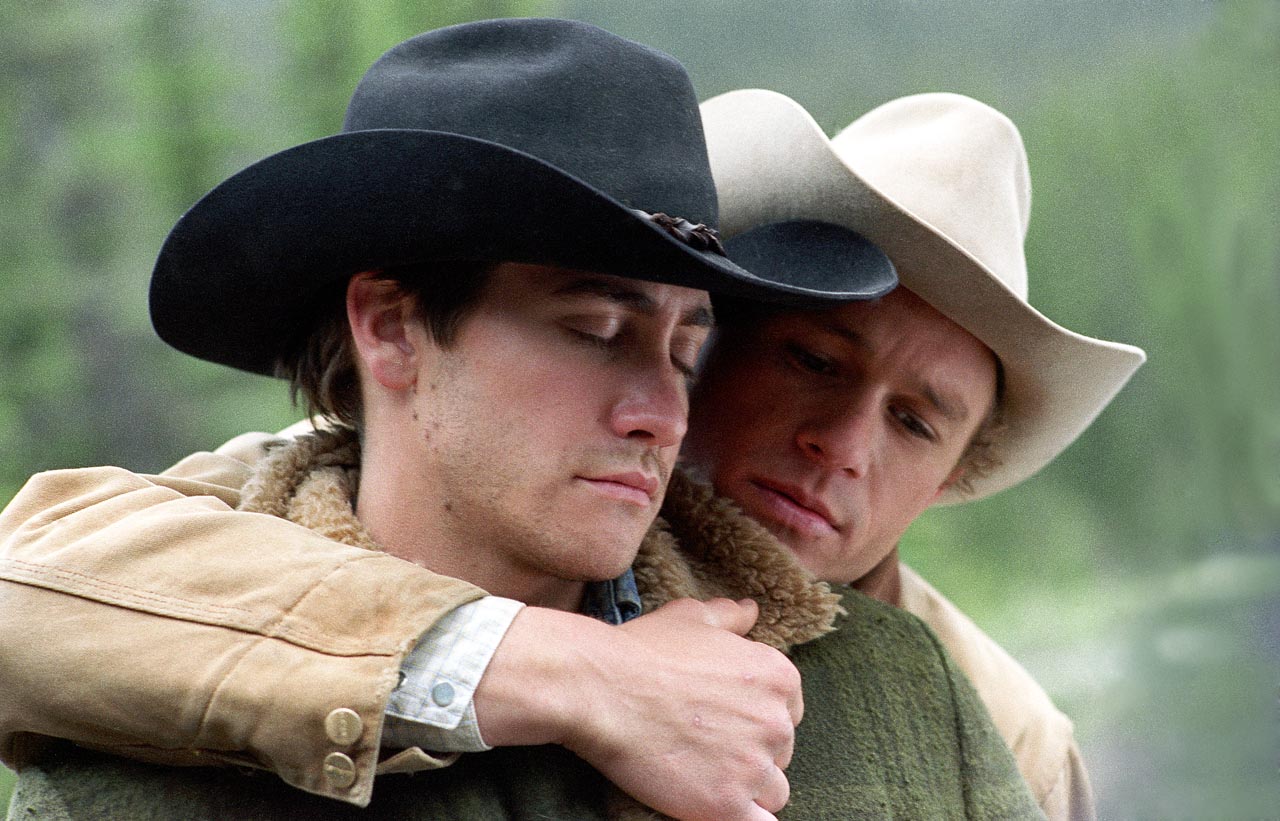
It was 2005. Most people forget how high the stakes were back then. When Ang Lee decided to adapt Annie Proulx’s short story about two sheep herders in Wyoming, the industry held its breath. People weren't just curious about the acting; they were obsessed with the brokeback mountain sex scenes and whether a mainstream Hollywood movie could handle them without flinching.
The movie didn't just "handle" them. It changed how we look at intimacy on screen.
The Raw Reality of the Tent
Let's be honest. Most cinematic love scenes are choreographed to look like a perfume commercial. They are backlit, slow, and weirdly hygienic. But the first encounter between Ennis Del Mar (Heath Ledger) and Jack Twist (Jake Gyllenhaal) is a different beast entirely. It’s messy. It is desperate. It’s actually kind of violent because it’s fueled by years of repressed identity and the harsh, lonely environment of the mountain.
Heath Ledger and Jake Gyllenhaal weren't just playing "lovers." They were playing men who didn't even have the vocabulary to describe what they were doing.
That first night in the tent isn't about romance. It's an explosion. Ennis is a man defined by silence and a terrifying upbringing—remember the story he tells about his father taking him to see the body of a murdered gay man? That trauma lives in his muscles. When the physical contact finally happens, it’s not a soft "coming out" moment. It’s a collision. Ang Lee famously told the actors that the scene needed to feel like a "struggle," not a dance.
Why the Choreography Mattered
Rodrigo Prieto, the cinematographer, used very specific framing here. The camera is tight. It’s claustrophobic. You feel the cold of the Wyoming (actually Alberta, Canada) wilderness pressing in on them. Unlike most 2000s-era films that used sex as a "break" in the action, here, it was the action. It was the only way these characters could communicate because they were literally forbidden from speaking the truth out loud.
Proulx wrote in her original New Yorker story that the event was "as remote as a hawk's flight." The film captured that distance and the sudden, jarring closeness that followed. It wasn't about being "graphic" for the sake of a rating; it was about the character arc. If that scene isn't intense, the next twenty years of their lives don't make sense.
Understanding the "Second" Scene
People always focus on the tent. They forget the reunion.
Four years pass. Jack drives up to Ennis’s place. They meet outside the apartment, shielded by a staircase. This second major moment in the brokeback mountain sex scenes trajectory is arguably more important than the first. It’s the scene that confirms this wasn't a "one-time thing" or a fluke of isolation.
The kiss against the wall is desperate. It’s a frantic attempt to reclaim four lost years in four seconds. It’s also incredibly risky—Ennis’s wife, Alma (Michelle Williams), sees them. This is where the tragedy really takes root. The intimacy isn't just a private act anymore; it’s a wrecking ball hitting their domestic lives.
Ledger's Approach to Intimacy
Heath Ledger was notoriously protective of these moments. He reportedly told Focus Features and the press that if they were going to do it, they had to do it for real—not "fake" the emotion. He hated the idea of the scenes being turned into a joke or a "gay cowboy" punchline.
Ledger's performance is all about the jaw. He keeps his mouth shut so tight it looks like it hurts. During the physical scenes, that tension doesn't go away. It’s a masterclass in acting through your shoulders. You can see the shame fighting with the desire in every frame. It’s why the movie still hurts to watch. It’s not a celebration; it’s a mourning for what could have been.
The Cultural Ripple Effect
You have to remember the context of the mid-2000s. The "Don't Ask, Don't Tell" era was in full swing. Marriage equality wasn't the law of the land. When these scenes played in theaters, people walked out. Some theaters in Utah refused to show it at all.
But for a huge portion of the audience, seeing two masculine archetypes—the cowboy, the ultimate American symbol of rugged individualism—engage in such raw vulnerability was a tectonic shift. It stripped away the campiness that Hollywood usually attached to queer characters. There were no quips. No glitter. Just dirt, denim, and a lot of unspoken pain.
Common Misconceptions
- "It was just about lust." Not really. If you watch the way Jack looks at Ennis afterward, it’s about domesticity. He wants a ranch. He wants a life. The sex was just the entry point to a longing for companionship.
- "The actors were uncomfortable." Both Gyllenhaal and Ledger have gone on record saying the physical aspects were just part of the job, like a stunt. They were more worried about getting the Wyoming accent right than the bedroom scenes.
- "It’s a 'gay' movie." It’s a tragedy about the cost of the closet. The sex scenes are the only moments where the characters aren't lying to themselves.
Technical Execution and the Rating
The film got an R rating, which was expected. But Ang Lee fought to keep the scenes grounded. He didn't want the "Hollywood Gloss." If you look at the lighting, it’s mostly naturalistic. In the tent, the light is dim, blue-toned, and cold. It emphasizes the fact that they are hiding in the shadows.
When they are outdoors in the daylight, they barely touch. That contrast is what makes the brokeback mountain sex scenes so potent. The sex represents a "shadow life" that can never survive the sun.
The Lasting Legacy
We see the influence of these scenes in movies like Moonlight or God’s Own Country. They gave filmmakers permission to treat queer intimacy with the same gravity and "prestige" typically reserved for straight historical dramas.
The brilliance of the film is that it uses these moments to build a bridge. Even if you aren't a 1960s ranch hand, you understand the feeling of wanting something you aren't allowed to have. You understand the "stolen moment."
How to Revisit the Film with New Eyes
If you’re watching it again, pay attention to the silence. Notice how the physical intimacy replaces the dialogue. Ennis says maybe 100 words in the whole movie, but his body language during the scenes with Jack tells the whole story of his life.
- Watch the hands: In the first tent scene, pay attention to the hesitation.
- Contrast the environments: Compare the heat of the reunion kiss with the cold, static nature of Ennis’s scenes with Alma.
- Listen to the score: Gustavo Santaolalla’s sparse guitar work often drops out during the most intense physical moments, leaving only the sound of breathing and the wind.
The real power of Brokeback Mountain isn't that it showed something "explicit." It’s that it showed something honest. It took the most private, vulnerable act possible and used it to dismantle a century of cowboy myths.
To truly understand the impact, one should look at the shooting script compared to the final cut. The script was even more sparse. The actors filled in the gaps with their physical performances.
Moving forward, if you're analyzing film history or queer cinema, start by looking at the editing of these sequences. They aren't cut like action scenes; they are cut like memories—fragmented, intense, and a little bit blurry. That's why they stay with you. They feel less like a movie and more like something you weren't supposed to see.
For those interested in the technical side of this era of filmmaking, researching Rodrigo Prieto’s "desaturated" color palette provides huge insight into how they made the characters' world feel so oppressive yet beautiful. Examining the production design by Judy Becker also reveals how the cramped interiors of the trailers and tents were designed to force the actors into each other's physical space, making the eventual intimacy feel inevitable rather than forced.