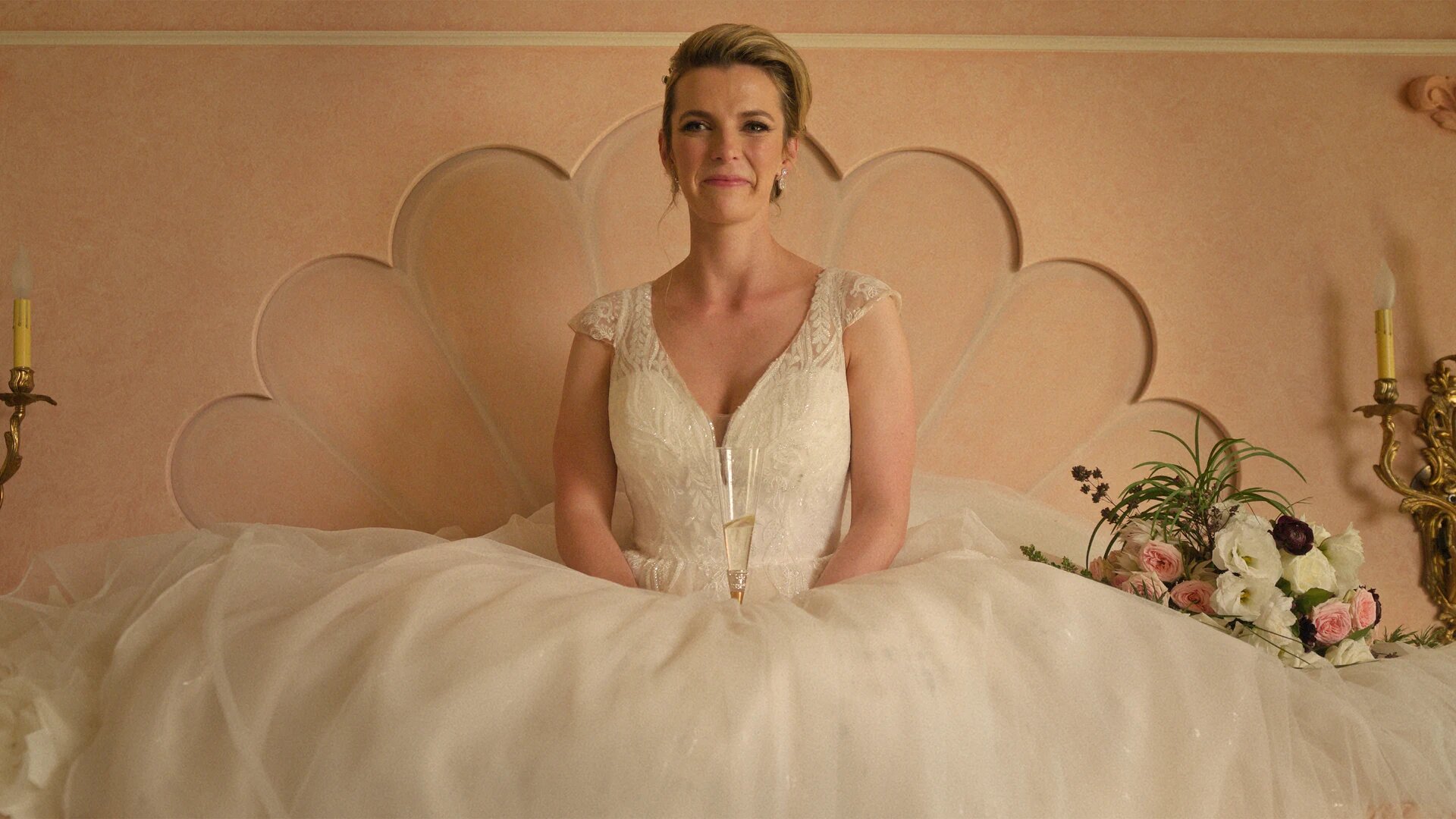
It starts with a trophy. Or maybe it starts with a husband who treats his wife like a prized piece of taxidermy. Honestly, if you haven't seen the "The Woman Who Was Kept on a Shelf" episode of the Apple TV+ anthology series Roar, you’re missing out on one of the most uncomfortable, visually striking metaphors for the "trophy wife" archetype ever put to film. It’s weird. It’s beautiful. It’s also deeply frustrating to watch.
The premise is basically exactly what the title says. A woman, played by the incredible Betty Gilpin, is literally installed on a custom-built shelf in her home by her husband. He doesn't chain her there. He doesn't lock her in a room. He just asks her to sit there so he can look at her. And she does.
What Actually Happens in Roar: The Woman Who Was Kept on a Shelf
To understand why this story hit such a nerve, you have to look at the setup. Betty Gilpin plays Model—yes, that’s actually her character's name in the credits—who is married to Harry, played by Daniel Dae Kim. Harry is a wealthy, high-achieving architect. He’s the kind of guy who wants everything in his life to be aesthetically perfect.
He builds this massive, minimalist shelf in their living room. It's high up. It has great lighting. He tells her she’s the most beautiful thing he’s ever seen and that he wants to be able to admire her all the time. So, he asks her to sit on the shelf.
At first, she thinks it’s a romantic gesture. She feels seen. She feels valued. But then the reality sets in. She’s stuck. She can’t reach her own glass of water. She can’t go to the bathroom without him bringing a ladder. She becomes an object in her own home. It’s a literal manifestation of the "gilded cage" trope, and Gilpin plays the transition from flattered to miserable with incredible nuance.
The episode is based on a short story by Cecelia Ahern from her collection also titled Roar. Ahern’s writing often takes these metaphorical "feminine" struggles and makes them literal. If a woman feels invisible, she literally disappears. If a woman feels like she’s being "kept," she ends up on a shelf.
The Symbolism Most People Miss
People usually watch this and think, "Okay, it's about a controlling husband." Sure. That’s the surface level. But the deeper, more biting critique is actually about the woman's complicity in her own confinement.
Model chose to get on the shelf.
She wanted the validation. She wanted to be the "perfect" wife. There is a specific scene where she realizes that by being "perfect," she has effectively erased her own personhood. The shelf isn't just a place; it's a state of being. She is literally being consumed by the male gaze.
Interestingly, the episode doesn't make Harry a mustache-twirling villain. He isn't hitting her. He isn't shouting. He's actually quite gentle, which makes the whole thing creepier. It’s the "benevolent sexism" that many women recognize in their own lives—the kind of "protection" that actually serves to limit someone's agency.
Why Betty Gilpin Was the Perfect Choice
Betty Gilpin has this specific ability to look like a 1950s pin-up while having a total existential crisis behind her eyes. You might know her from GLOW or The Hunt. In this episode, she has to do a lot of acting with just her face and her posture because, well, she’s sitting on a shelf for 90% of the runtime.
The physical toll of the role is apparent. You see her legs cramping. You see the dust gathering on her skin. It turns a "pretty" concept into something visceral and gross. When she finally decides to get down, it’s not a graceful cinematic moment. It’s a desperate, messy struggle for survival.
Is It Worth a Watch?
If you like Black Mirror or The Twilight Zone, you’ll probably dig this. It’s surreal. It’s satirical. It’s also part of a larger eight-episode series that features other big names like Nicole Kidman, Issa Rae, and Cynthia Erivo.
Each episode of Roar deals with a different "absurd" female experience.
- One woman eats photographs to preserve memories.
- Another finds bite marks on her skin that represent her guilt as a working mother.
- One woman literally starts to disappear as she gets older and people stop looking at her.
But "The Woman Who Was Kept on a Shelf" remains the standout for many because of how relatable the core feeling is. Who hasn't felt like they were performing a version of themselves for someone else's benefit? Who hasn't felt like they had to stay still and look nice to keep the peace?
The Practical Takeaway from the Story
The episode ends with a pretty powerful shift in perspective. Without giving away the very last beat, let’s just say that the shelf doesn't stay occupied forever.
The lesson here isn't just "don't marry an architect who builds shelves for humans." It’s a reminder that the pedestals we are put on are often just another type of prison. If you find yourself in a situation where your "value" is tied entirely to how you make someone else look or feel—without regard for your own mobility or needs—you’re on a shelf.
Actionable Insights for the Viewer:
If the themes of Roar resonate with you, it might be time to audit the "shelves" in your own life.
- Identify the "Gilded Cages": Look for areas where you are being "rewarded" for staying small or quiet. This could be at work, in a relationship, or even in family dynamics.
- Reclaim Agency: Small acts of "getting off the shelf" matter. If you’ve been performing a role, try breaking the script. See how the people around you react. If they get upset that you're no longer "on display," that's a huge red flag.
- Engage with the Source Material: If the episode intrigued you, read Cecelia Ahern’s book. The short stories are quick, punchy, and offer even more metaphors that the show didn't have time to cover.
Ultimately, the story is a call to action. It’s a nudge to stop being a decoration in your own life. Get down from the shelf, even if the floor is a little dusty and the climb is scary. It’s better to be on the ground and moving than stationary and "perfect" on a wall.
To dive deeper into the series, you can stream Roar on Apple TV+. It's a quick binge—each episode is under 40 minutes—making it perfect for a weekend watch when you want something that will actually make you think.
Next Steps for Your Viewing Experience:
Check out the episode "The Woman Who Disappeared" next. It pairs perfectly with the shelf metaphor, focusing on how society treats women as they age. It’s a stark look at the flip side of being "watched" too closely—the fear of not being seen at all.