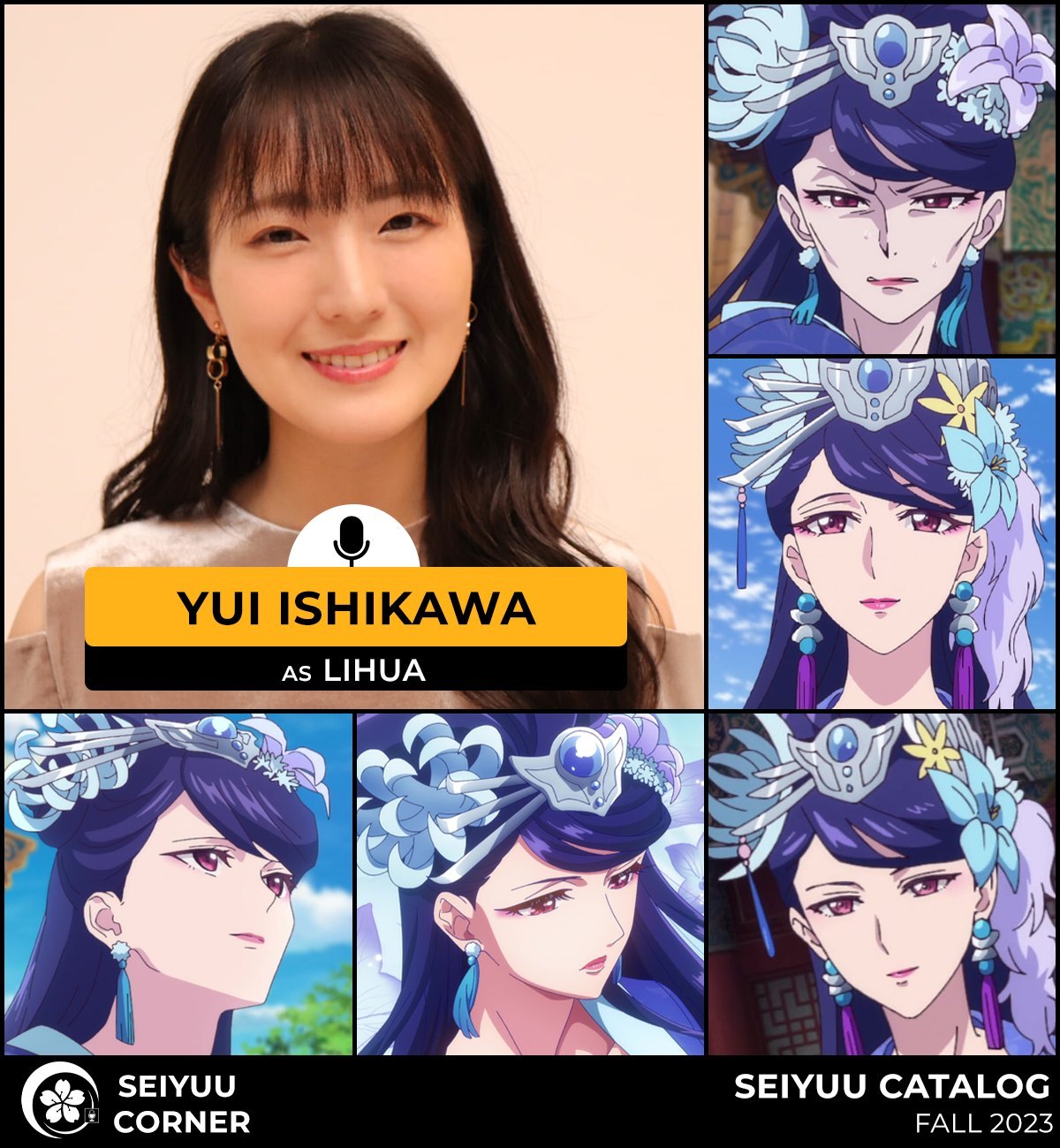
Lihua is a bit of a heartbreaker. Honestly, if you’ve watched or read The Apothecary Diaries, you probably started out feeling sort of indifferent toward the Great Concubine of the Crystal Pavilion. She seemed like just another high-ranking woman in the Rear Palace, draped in fine silks and burdened by the heavy expectations of the Emperor’s favor. But then, the tragedy hits. It hits hard. Lihua in The Apothecary Diaries serves as the primary lens through which we see the brutal, often fatal reality of life inside the palace walls, and her survival is one of the most underrated arcs in the series.
The Poisoned Reality of the Crystal Pavilion
The story kicks off with a grim mystery. Two of the Emperor’s infants are dying. One belongs to Lady Gyokuyou, the other to Lady Lihua. While Gyokuyou listens to the cryptic warning Maomao leaves behind, Lihua’s household ignores it. That choice is devastating.
Lihua loses her son.
It’s not just a personal loss; in the political ecosystem of the Rear Palace, a son is a lifeline. Without him, her status wavers. She begins to wither away, consumed by a mysterious illness that the palace physicians can't seem to cure. They call it a curse. They call it grief. Maomao, being the pragmatist she is, calls it lead poisoning.
The "makeup" that was supposed to make Lihua beautiful for the Emperor was literally killing her. It’s a chilling historical parallel to real-world cosmetics used in various eras, where lead-based ceruse was the standard for that ghostly white complexion. Lihua wasn't being haunted by a ghost; she was being slowly executed by her own vanity and the ignorance of her staff.
Maomao’s Intervention and the Harsh Recovery
When Maomao is eventually sent to treat Lihua, the atmosphere is toxic. Literally and figuratively. Lihua’s ladies-in-waiting are protective to the point of being obstructive. They see Maomao as a low-born interloper.
Maomao’s treatment isn't some magical potion. It's grueling. It involves scrubbing the toxic powder off Lihua’s skin and forcing her to eat when she has no appetite. There’s a specific scene where Maomao basically has to get physical to ensure Lihua recovers, which highlights the class divide. A servant touching a high-ranking concubine like that is usually a death sentence. But Lihua is dying anyway.
What makes Lihua interesting here is her vulnerability. We see her stripped of the "Great Concubine" persona. She is a grieving mother whose body is failing her. She is skeletal, pale, and utterly broken. Yet, through this process, she develops a profound, silent respect for Maomao. It’s one of the few genuine bonds in the series that isn't built on political maneuvering, even if it started as a medical necessity.
The Weight of the "Great Concubine" Title
In the hierarchy of the Rear Palace, there are four main concubines. Lihua represents the South, associated with the element of Fire and the color red. She’s meant to be the pinnacle of dignity.
But dignity is a heavy mask to wear when your child is dead.
The series does an incredible job of showing how Lihua is expected to just... move on. The Emperor still visits. She is still expected to perform. There’s a layer of psychological horror in her character arc that people often gloss over because Maomao’s detective work takes center stage. Lihua is a survivor of a system that views her primarily as a vessel for heirs. When that vessel "breaks," the system tries to discard her.
Why Lihua Struggles More Than Gyokuyou
Comparing Lihua to Gyokuyou is natural, but it’s a bit unfair. Gyokuyou is clever, playful, and has a very sharp mind for palace politics. Lihua is more traditional. She follows the rules. She trusts the established order.
That trust is exactly what nearly kills her.
Lihua’s ladies-in-waiting weren't trying to kill her; they were following the "proper" ways of the court, using the "best" expensive makeup and following traditional protocols. This makes Lihua a tragic figure of the status quo. She is the personification of what happens when you do everything "right" in a broken system and still lose everything.
The Visual Storytelling of Lihua’s Health
If you watch the anime adaptation by OLM and Wit Studio, the visual shift in Lihua is staggering. The artists didn't hold back on making her look genuinely ill. Most anime would keep a "sick" character looking pretty with maybe a slight cough. Not here. Lihua looks haunting. Her eyes are sunken. Her skin has a greyish tint.
This visual commitment is important because it validates Maomao’s anger. Maomao is usually indifferent to palace drama, but she gets genuinely pissed off when people ignore medical facts for the sake of "tradition." When Lihua finally recovers—truly recovers—the return of her "Fire" persona is a triumphant moment. She isn't just healthy; she’s reclaimed her power.
That One Scene with the Emperor
There’s a pivotal moment after Lihua’s recovery where she has to "re-debut" for the Emperor. Maomao assists her, but not with the toxic lead makeup. Instead, she uses clever techniques to highlight Lihua’s natural beauty while hiding the lingering effects of her illness.
This isn't just about looking good for a man. It’s about survival. If the Emperor loses interest, Lihua’s Crystal Pavilion loses its funding, its protection, and its influence. It’s a high-stakes performance. The way Lihua carries herself in that moment—with a mix of trembling fear and absolute iron-willed resolve—is why she’s one of the best-written characters in the series.
Common Misconceptions About Lihua
A lot of casual fans think Lihua is "weak" because she succumbed to the poison while Gyokuyou didn't. That’s a fundamental misunderstanding of the situation.
- Exposure Levels: Lihua used the toxic powder far more frequently and in higher concentrations than Gyokuyou did.
- The Infant Factor: Lihua’s son was already weaker, and the powder was applied directly to him by his wet nurse. The tragedy wasn't a lack of will; it was a lack of information.
- The Grief Cycle: Lihua’s "illness" was exacerbated by clinical depression. Losing a child in that environment isn't just a personal blow; it’s a public failure.
She isn't weak. She’s resilient. Anyone else would have stayed in that bed until they died. Lihua chose to listen to a girl who was technically a "kidnapped" servant and did the hard work of getting better.
The Apothecary Diaries and the Historical Context of Lead Poisoning
The story of Lihua isn't just fiction. It’s a commentary on the "Oshiroi" (white powder) used in ancient Japan and China. For centuries, lead white was the gold standard for beauty. It gave a smooth, matte finish that stayed on even in humid climates.
The symptoms Lihua shows—fatigue, abdominal pain, irritability, and eventually organ failure—are textbook lead poisoning cases. By including this, Natsu Hyuuga (the author) grounded the fantasy of the Rear Palace in a very grim reality. Lihua is essentially a victim of her era's "science."
Lihua’s Growth Beyond the Illness
As the story progresses, Lihua becomes a subtle ally. She doesn't become Maomao’s "best friend"—the social gap is too wide for that—but she becomes a woman who knows the value of truth over tradition. She represents a shift in the Rear Palace.
Her presence serves as a constant reminder of what’s at stake. In a world of pretty flowers and silk fans, Lihua is the one who has seen the bottom of the grave and climbed back out. She brings a gravity to the Crystal Pavilion that balances out the more lighthearted moments in the Jade Pavilion.
Actionable Insights for Fans and Readers
If you're looking to fully appreciate Lihua’s character arc, keep these points in mind during your next re-watch or re-read:
- Watch the background characters: Pay attention to Lihua’s ladies-in-waiting. Their transition from hostile gatekeepers to humbled servants is a direct result of Lihua’s leadership style changing after her recovery.
- Contrast the Pavilions: Notice how the Crystal Pavilion (Lihua) is decorated compared to the Jade Pavilion (Gyokuyou). The starkness of Lihua’s environment during her sickness reflects her internal state perfectly.
- Follow the Medical Logic: Research the history of "Lead White" in cosmetics. It adds a whole new layer of horror to Lihua’s scenes when you realize how common this actually was in royal courts across the world.
- Re-evaluate the "Rivalry": Lihua and Gyokuyou aren't enemies in the way typical "mean girl" tropes work. They are competitors in a high-stakes game where losing means death, but they share a mutual respect for the tragedy they both endured.
Lihua’s journey is one of the most grounded and moving parts of The Apothecary Diaries. She reminds us that even in a world filled with intrigue and secrets, the most dangerous things are often the ones we’re told are the most beautiful. Overcoming the "poison" of the palace—both literal and metaphorical—is her true legacy.