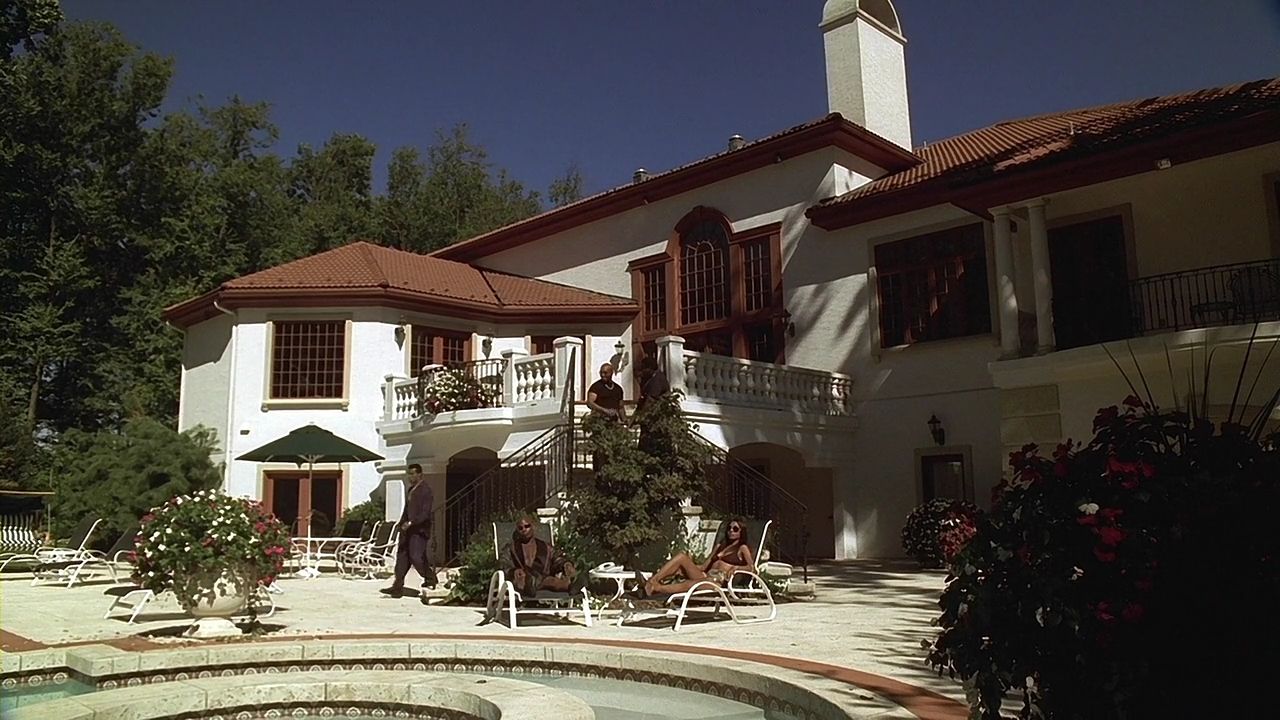
The Sopranos didn't usually miss. David Chase and his writers had this almost supernatural ability to take a character, drop them into North Jersey, and make them feel like they'd lived there for forty years. But then came "A Hit Is a Hit." That’s the episode where we meet Massive Genius, the high-powered, intellectual hip-hop mogul played by Bokeem Woodbine. To some fans, he was a fascinating mirror to Tony Soprano. To others? He was a walking caricature that felt like he belonged in a different show entirely.
Let's be real. Watching Christopher Moltisanti and Adriana La Cerva try to navigate the world of high-stakes music publishing is cringe-inducing. It’s supposed to be. But the introduction of Massive Genius—a man who is simultaneously a gangsta rapper and a refined art collector—brought a weird, friction-filled energy to Season 1 that people are still arguing about on Reddit today.
The Reality of the Massive Genius Power Play
When you look at the character of Massive Genius, he wasn’t just there to provide a contrast in musical taste. He represented a specific type of New York power that the DiMeo crime family didn't quite know how to handle. Tony and his crew are used to intimidation. They break legs. They lean on people. But Massive Genius? He leans on litigation.
He enters the frame at a Burger Boy, of all places, and the vibe is immediately off. Chris and Ade are out of their depth. Woodbine plays the character with this incredibly cool, almost detached intellectualism. He’s quoting penology. He’s talking about the "property" of Hesh Rabkin’s past. It’s a culture clash that reveals a lot about the inherent provincialism of the Soprano crew. They think they’re the kings of the world, but they don't even understand the corporate structure of the music industry they're trying to shake down.
Bokeem Woodbine actually did a phenomenal job with what he was given. If you look at his career, he’s always been great at playing guys who are smarter than everyone else in the room but won't tell you that directly. In The Sopranos, he had to play a guy who was basically a stand-in for Russell Simmons or Suge Knight, but with a Harvard-level vocabulary. It was a lot to ask for a one-off guest spot.
Why the Hesh Subplot Matters
The meat of the Massive Genius arc isn't actually about rap music. It’s about the "old days." Massive Genius identifies a claim that Hesh Rabkin—Tony’s mentor and father figure—exploited Black artists in the 1950s and 60s. He’s specifically looking for royalties for a relative.
This is where the show gets deeply uncomfortable and very honest. Hesh, played by the late Jerry Adler, isn't some mustache-twirling villain. He’s a guy who views himself as a fair businessman. But Massive Genius points out the structural theft that built the record industry. It’s a rare moment where the show looks at the "honor" of the old-school guys and says, "Actually, you guys were just thieves with better PR."
The confrontation between Hesh’s lawyers and Massive’s team is a masterclass in passive-aggressive negotiation. It’s not about who has the most guns. It’s about who has the better paper trail. When Hesh countersues by threatening to expose Massive's own sampling "thefts," the whole thing fizzles out. It’s a stalemate. In the world of The Sopranos, nobody is truly clean, and Massive Genius learns that the hard way.
Why Fans Still Call This the Worst Episode
If you poll a group of die-hard fans about their least favorite episode, "A Hit Is a Hit" is usually in the bottom three. Why? Because the dialogue for the "urban" characters often feels like it was written by people who had never stepped foot in a recording studio.
The band Visiting Day (formerly Defiler) is intentionally bad. We get that. Richie Santini frying his brain on drugs and trying to record a hit is funny. But the way Massive Genius talks—it’s a bit stilted. He says things like, "Bold men make bold moves." It feels a little "written."
- The show was still finding its feet in Season 1.
- The writers hadn't quite mastered the intersection of the Mafia and Black celebrity culture.
- The pacing of the music industry plot felt detached from the heavy psychological drama of Tony’s therapy sessions.
Honestly, though, the episode is better than people remember. It shows Christopher's desperation to be "more" than just a solider. He wants to be a mogul. He wants the life he thinks Massive Genius has. Watching Chris try to act "street" around Massive’s crew is some of the best secondhand embarrassment in television history. Michael Imperioli plays that desperation so perfectly. You can see the sweat.
The Legacy of Bokeem Woodbine’s Performance
Despite the writing hiccups, Woodbine brought a gravity to the role. He didn't play Massive as a thug. He played him as a businessman who used the image of a thug to build an empire. Sound familiar? That’s exactly what Tony Soprano does. Tony uses the image of the "Old Country" and "Family Values" to run a gambling and waste management racket.
The two men are mirrors. They both have big houses. They both have "crews." They both are obsessed with history and legacy. But because of the racial and cultural divide, they can never see each other as equals. They just see each other as obstacles or targets.
The Legal Reality of the "F-Note"
There's a specific detail in the episode that people often miss. Massive Genius brings up the "F-Note" records. This is a direct reference to the real-life history of independent labels like Roulette Records, which were notoriously mob-connected. Morris Levy, the real-life inspiration for some of Hesh’s business practices, was a legendary figure who was eventually convicted of extortion.
By bringing Massive Genius into the fold, the show was acknowledging that the Mafia’s influence wasn't just in construction or garbage. They were the silent partners in the soundtrack of America. Massive Genius wasn't just a rapper; he was a historian of his own people’s exploitation. When he threatens to sue Hesh, he’s not just looking for a check. He’s looking for a confession. He never gets it.
Actionable Takeaways for a Sopranos Rewatch
If you’re planning a rewatch, don't skip "A Hit Is a Hit." It’s easy to dismiss, but it offers a lot of context for Christopher’s later failures as a producer and "ideas man."
Look for the subtle power shifts: Notice how Massive Genius never raises his voice. In the world of the Sopranos, the person who screams loudest is usually the one with the least power. Massive is the quietest person in the episode.
Track the hypocrisy: Pay attention to Hesh’s reaction to the claims against him. He is genuinely offended. He sees himself as a victim of the "new way" of doing business, completely ignoring the fact that he profited off the "old way" which was inherently rigged.
Analyze Christopher's identity crisis: This episode is the blueprint for Chris’s obsession with Hollywood and fame. He doesn't want to be a mobster; he wants to be a "somebody." Massive Genius represents the peak of that "somebody" status.
The character of Massive Genius might feel like a relic of 1999, but the themes he brought to the table—cultural appropriation, the transition from street power to corporate power, and the weight of historical debt—are more relevant now than they were when the episode first aired. He was a genius, maybe not in the way he thought, but in the way he forced the audience to see the Soprano family’s limitations.
To get the most out of this arc, compare the resolution of the Hesh/Massive conflict with the later Season 4 episode "Watching Too Much Television." You'll see a recurring theme: when the mob tries to play in the world of high finance and legitimate business, they often find themselves outmatched by people who don't need a gun to ruin your life.
***