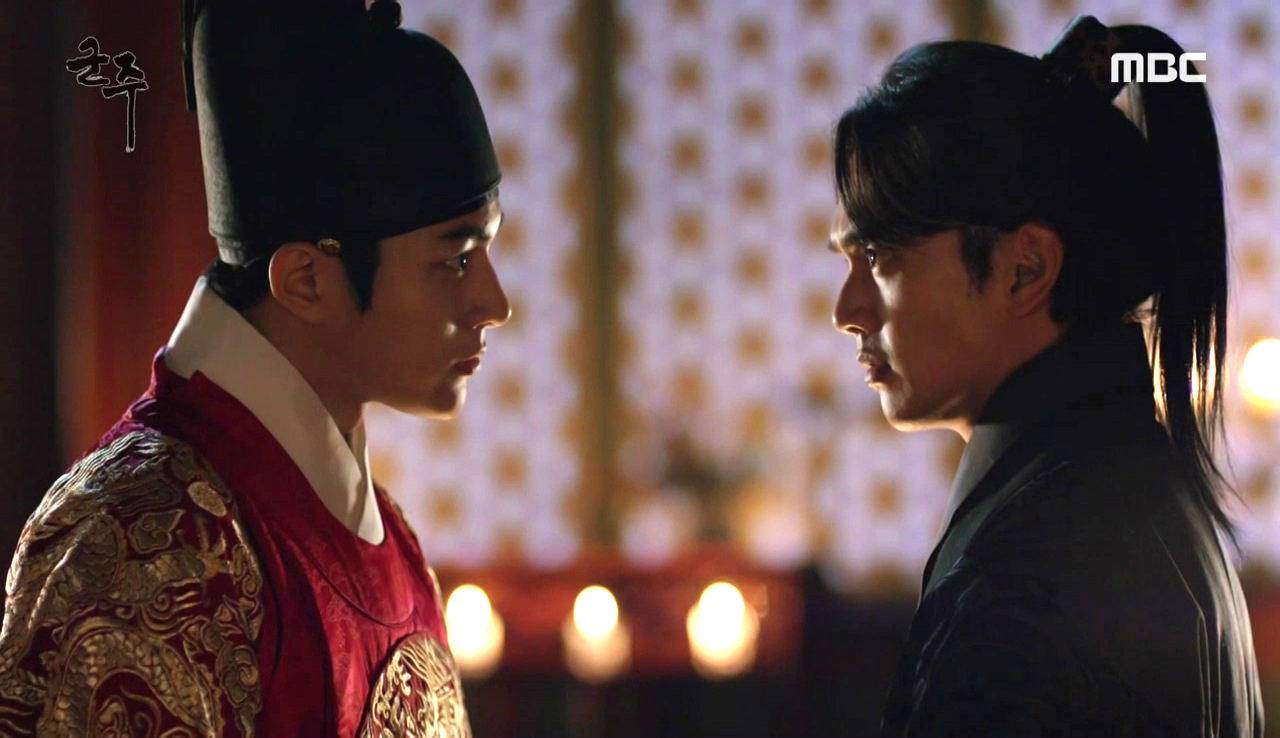
If you spent any time on the K-drama side of the internet around 2017, you couldn't escape the hype. The Emperor: Owner of the Mask—or as most of us call it, Ruler of the Mask—was everywhere. It wasn't just another historical drama (sageuk) filling a slot on MBC. It felt like a massive event. You had Yoo Seung-ho, Kim So-hyun, and L (Kim Myung-soo) from INFINITE. That’s a powerhouse trio.
But looking back, does it actually hold up? Or was it just the visual appeal of a very young, very talented cast that kept us glued to our screens?
Honestly, the show is a bit of a mess in places. It’s a beautiful, heart-wrenching, sometimes frustrating mess. To understand why Ruler of the Mask remains a staple in the sageuk conversation, you have to look past the pretty costumes and dig into the weirdly dark political commentary it was trying to make about something as basic as water.
The Pyeonso-hwe and the Privatization of Water
The premise is kinda wild when you strip it down. We’re in the Joseon dynasty. Usually, these shows are about a specific king or a war with a neighboring country. But Ruler of the Mask focuses on the Pyeonso-hwe. This is a secret society that basically owns the kingdom because they control the water supply.
It’s terrifyingly modern.
Think about it. In a world before electricity or modern infrastructure, if one group owns the wells, they own the people. The King is essentially a puppet. To protect his son, Crown Prince Lee Sun (Yoo Seung-ho), the King forces him to wear a mask from birth. The official story? A mysterious skin disease. The real reason? If the Pyeonso-hwe doesn't know what the Prince looks like, they can’t replace him with a double or control him as easily.
It’s a high-stakes game of poker where the Prince’s face is the ultimate card.
The drama really hits its stride when the Prince sneaks out. He meets Han Ga-eun (Kim So-hyun) and another guy also named Lee Sun (L). This commoner Lee Sun is brilliant but trapped by his low social standing. The way their lives intertwine is where the show gets its emotional weight.
Why Yoo Seung-ho’s Performance Matters
Yoo Seung-ho is a child actor who actually transitioned into adult roles successfully. That’s rare. In Ruler of the Mask, he has to do a lot of heavy lifting. He spends a significant portion of the early episodes behind a physical mask.
How do you act when half your face is covered?
He does it through his eyes and his voice. There’s a specific kind of desperation he brings to the role of a royal who realizes his entire life has been a lie designed to keep him safe but powerless. When he finally removes the mask and has to reclaim his throne from an impostor, the shift in his demeanor is palpable.
Then you have L. People were skeptical when he was cast. "Idol actors" always get a hard time in Korea. But his portrayal of the "fake" King—the commoner Lee Sun who is forced to sit on the throne as a decoy—is surprisingly tragic. He’s a villain, sure, but he’s a villain born out of an Inferiority complex and a crushing desire to be seen as an equal.
His descent into obsession over Ga-eun is uncomfortable to watch, but it makes sense for a character who has never owned anything in his life, not even his own name.
The Real-World History Behind the Fiction
While the Pyeonso-hwe is a fictional creation, the struggle for resource control in Joseon was very real. Historians often point out that the late Joseon period was rife with corruption among the Sedo (powerful families). These families often bypassed the King's authority to exploit the peasantry.
Ruler of the Mask takes that historical reality and turns it into a literal monopoly on water.
Is it historically accurate? No. Not really. But it captures the feeling of a crumbling monarchy. The show uses the fictional "Kkotsun" poppy pills—a drug used by the Pyeonso-hwe to keep officials addicted and loyal—as a metaphor for the toxic nature of power. Once you take the "poison" of the secret society, you can’t leave.
It’s dark stuff for a show that also features a lot of slow-motion shots of cherry blossoms.
The Mid-Series Slump and Fan Frustrations
We have to talk about the writing. Around episode 20 (or episode 10 in the hour-long format), things get... circular.
K-dramas often suffer from "live-shooting" stress where the scripts are being written as they film. You can see it here. The Prince makes the same mistakes. Ga-eun, who starts as a strong, intelligent character, often gets relegated to a "damsel in distress" role.
This is a common complaint among fans of Ruler of the Mask. We wanted Ga-eun to be the mastermind. Instead, she spent a lot of time being a pawn in the game between the two Lee Suns. It’s a missed opportunity, especially given Kim So-hyun’s range. She’s an actress who can carry a show on her own, and seeing her character narrowed down to a romantic interest was a bit of a letdown for many.
However, the chemistry between the leads usually saved the day. The "will they, won't they" dynamic combined with the threat of execution kept the ratings high. The show consistently hit 12-15% in viewership, which is great for that era.
Production Design: The Visual Language of Joseon
One thing nobody can argue with is how the show looks. The cinematography in Ruler of the Mask is top-tier.
The contrast between the bright, vibrant colors of the palace and the dusty, muted tones of the commoner markets highlights the wealth gap. The mask itself is a work of art. It’s not just a piece of metal; it looks heavy. It looks like a burden.
When the Prince is in hiding, working as a peddler, the show takes on a more grounded, earthy feel. This visual transition helps the audience track his growth from a shielded boy to a man who understands the dirt and grit of the world he’s supposed to rule.
The Music: Why the Soundtrack Still Lingers
You can’t talk about this drama without mentioning the OST. "Even If I Die" by Yang Yo-seob and "The Man That Couldn't Leave" by Hwang Chi-yeul are absolute gut-punchers.
Music in a sageuk has a specific job: it has to bridge the gap between a historical setting and modern emotions. The sweeping orchestral tracks mixed with pop ballads did exactly that. It made the stakes feel epic. Even when the plot dragged, the music convinced you that every moment was life-or-death.
Comparing Ruler of the Mask to Other Sageuks
If you’re deciding whether to watch this, you’re probably comparing it to Moon Lovers: Scarlet Heart Ryeo or Love in the Moonlight.
It’s not as heartbreakingly tragic as Moon Lovers, and it’s not as fluffy and romantic as Love in the Moonlight. Ruler of the Mask sits in this weird middle ground. It’s a political thriller that happens to have a romance at the center.
- Political Intrigue: Higher than most. The water monopoly plot is actually quite clever.
- Romance: It’s there, but the brotherhood/rivalry between the two Lee Suns is more interesting.
- Action: Solid. The sword fighting is well-choreographed, especially in the latter half.
What We Can Learn From the Ending
Without spoiling the exact details for those who haven't finished it, the resolution of Ruler of the Mask is bittersweet. It addresses the central question: can a King truly belong to his people if he was raised in total isolation?
The show suggests that the "mask" wasn't just the physical one. Everyone in the drama was wearing a mask—of duty, of greed, or of forced identity. True leadership only happened when those masks were dropped.
Actionable Takeaways for Your Watchlist
If you're going to dive into Ruler of the Mask, keep these things in mind to get the most out of the experience:
- Focus on the second lead: L's performance as the commoner Lee Sun is arguably the most complex arc in the show. Watch his eyes during the palace scenes; the transition from fear to cold ambition is subtle.
- Don't skip the "boring" politics: The water privatization plot is the most unique part of the story. It’s what separates this from a standard "royal find a girl" story.
- Prepare for a slow middle: If you feel like the plot is repeating itself around the halfway mark, hang in there. The final four episodes pick up the pace significantly as the palace coup unfolds.
- Watch the peddler scenes: The sections where the Prince is working with the peddler guild are some of the best world-building moments. It shows how the economy of Joseon actually functioned outside the palace walls.
Ruler of the Mask isn't a perfect drama. It has flaws in its pacing and sometimes treats its female lead as a plot device. But the core conflict—the fight for a basic human right like water against a shadowy corporate-like entity—makes it feel surprisingly relevant. It’s a story about identity, the weight of a crown, and the cost of doing the right thing in a system built on corruption.
If you want to see Yoo Seung-ho at his peak emotional range or explore a sageuk that tries to do something different with its political stakes, this is the one to put on your list. It reminds us that power isn't just about who sits on the throne; it's about who controls the things we can't live without.
Next Steps for Fans:
- Check out the official MBC archives for behind-the-scenes footage of the mask-making process; the craftsmanship is incredible.
- Compare the character arcs with The Crowned Clown (2019) if you enjoy the "impostor on the throne" trope; it’s a great companion piece.
- Listen to the full OST on Spotify or YouTube to appreciate the traditional Korean instrumental layers that are often buried in the broadcast audio.