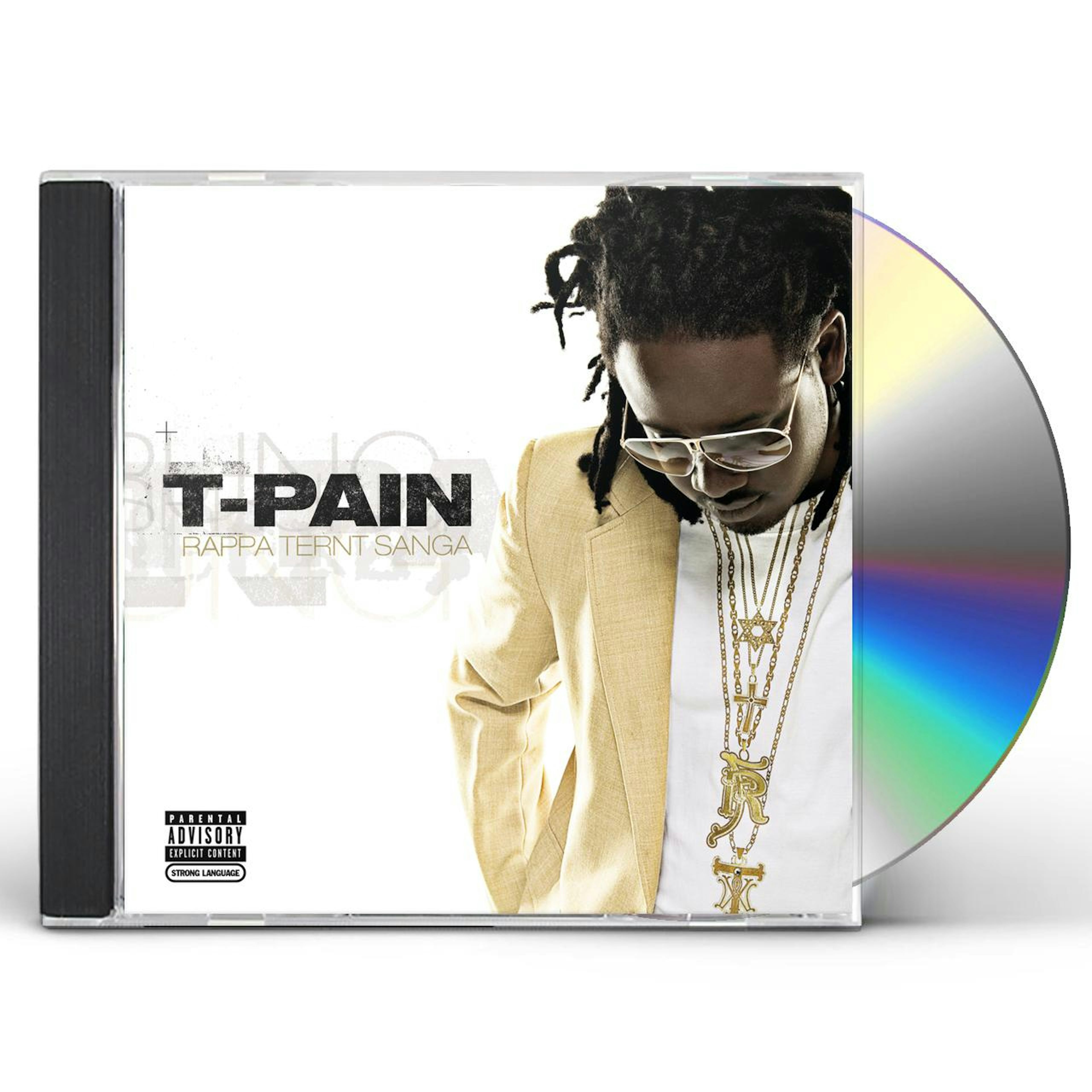
When Faheem Najm stepped into the spotlight in 2005, the hip-hop world didn't really know what to do with him. He was a dreadlocked kid from Tallahassee who called himself T-Pain, and he was doing something that felt almost like a cheat code at the time. He wasn't just rapping, and he wasn't just singing. He was blurring the lines using a tool most "serious" artists looked down upon. T-Pain Rappa Ternt Sanga arrived on December 6, 2005, and honestly, it changed the sound of the radio forever.
It's weird to think about now, but people were genuinely confused. Was he a gimmick? Was the pitch correction covering up a lack of talent?
History has given us the answer. The album wasn't just a debut; it was the blueprint for the next twenty years of melodic rap. Without this record, we don't get the current iterations of Travis Scott, Future, or Lil Uzi Vert. It all started with a $400 piece of software and a guy who just wanted to sound different from everyone else in Florida.
The Tallahassee Trailblazer and the Akon Connection
Before the world knew him as the King of Auto-Tune, T-Pain was part of a rap group called Nappy Headz. They had a bit of local success, but Pain was restless. He recorded a version of Akon's "Locked Up" called "I'm Fucked Up," which caught the attention of the Konvict Muzik boss himself. Akon didn't just see a rapper; he saw a hitmaker.
The title Rappa Ternt Sanga was a literal description of his career pivot. He was leaving behind the hardcore bars of the Tallahassee streets to embrace a more melodic, soulful, and digitized sound.
Most people don't realize how DIY the early stages were. Pain was experimenting with the Cher effect—that warbling, robotic vocal texture—not because he couldn't sing, but because he loved the way it cut through a car stereo. He spent hours in his home studio figuring out how to make the software "break" in just the right way to create those signature runs.
Breaking Down the Hits: "I'm Sprung" and "I'm 'n Luv (Wit a Stripper)"
"I'm Sprung" was the lead single, and it was a massive risk. It was vulnerable. It was catchy. It was... very robotic.
The song peaked at number eight on the Billboard Hot 100. It proved that audiences didn't care about the "purity" of the vocals as long as the vibe was right. The lyrics were relatable, focusing on that feeling of being totally whipped by a girl who maybe wasn't the best for you.
Then came "I'm 'n Luv (Wit a Stripper)."
This track was a cultural phenomenon. Featuring Mike Jones (Who? Mike Jones!), it became an anthem in clubs across the country. But beyond the subject matter, the production was incredibly sophisticated for a debut. T-Pain produced almost the entire album himself. This is a detail that often gets lost. He wasn't just a face; he was the architect. He was handling the MIDI programming, the vocal layering, and the final arrangements.
The album isn't just these two hits, though. Tracks like "Studio Luv" and "Fly Away" showed a range that most critics ignored at the time. "Fly Away" in particular showcased a more somber tone, touching on the pressures of his newfound fame and the struggles of his upbringing.
The Auto-Tune Backlash and the Redemption Arc
It’s impossible to talk about Rappa Ternt Sanga without mentioning the "Antichrist of Music" label that was eventually slapped on T-Pain. By 2009, Jay-Z released "D.O.A. (Death of Auto-Tune)," which many saw as a direct shot at the house T-Pain built.
But here’s the thing: Pain was the only one doing it right.
While everyone else started using pitch correction to hide their inability to hit a note, T-Pain used it as an instrument. He famously said in his Netflix Rhythm + Flow appearance and various interviews that he treats Auto-Tune like a guitar pedal. He knows how to sing—as evidenced by his legendary NPR Tiny Desk concert years later—but the "Rappa Ternt Sanga" aesthetic was a deliberate artistic choice.
The industry tried to bury the sound, but the sound won.
Look at the charts today. Nearly every major hip-hop artist uses some form of vocal processing inspired by the groundwork laid on this 2005 debut. The "sanga" half of the title became the dominant force in rap.
Why the Production Still Slaps
If you go back and listen to the album today, the 808s are surprisingly crisp. T-Pain had a knack for creating "wide" sounds. He layered his own vocals dozens of times to create those thick, choral harmonies that sounded like a futuristic gospel choir.
- He avoided the "chipmunk soul" trend of the mid-2000s.
- He focused on heavy synth-bass that favored the "Dirty South" club scene.
- He used syncopation in his delivery that felt more like a drummer than a traditional singer.
The album sold over 800,000 copies, narrowly missing platinum status at the time, though its influence is worth far more than the physical sales. It established Tallahassee on the map, a city often overlooked in favor of Miami or Atlanta.
Key Facts About the Debut
- Release Date: December 6, 2005.
- Label: Konvict Muzik / Jive Records.
- Production: Handled almost entirely by T-Pain himself.
- Chart Success: Debuted at #33 on the Billboard 200.
- Features: Included Mike Jones, Akon, Styles P, and Trick Daddy.
The guest list was strategic. Getting Styles P on "I'm Sprung (Remix)" gave him street credibility in the North, while Trick Daddy solidified his Florida roots. It was a masterclass in regional marketing.
Dealing With the "Gimmick" Label
For years, the narrative was that T-Pain was a one-trick pony. The industry treated Rappa Ternt Sanga as a novelty act.
Actually, that’s exactly why it succeeded. It didn't sound like the polished R&B of Usher or the gritty rap of 50 Cent. It lived in a third space. It was "happy music" even when it was sad. There was a sense of playfulness on the record—like on the "Skits"—that reminded listeners that music was supposed to be fun.
The album's legacy isn't just the software; it's the permission it gave rappers to be emotional. Before the "emo-rap" explosion of the 2010s, there was T-Pain singing about his feelings through a vocoder. He made it okay to be "sprung."
Actionable Insights for Music Students and Artists
If you’re an aspiring artist or a music historian looking at Rappa Ternt Sanga, there are a few concrete lessons to take away from T-Pain's debut:
- Master Your Tools: Don't just use a plugin; learn how it works. T-Pain didn't just turn on Auto-Tune; he adjusted the "retune speed" to create a specific vibrato that wasn't a factory setting.
- Own Your Narrative: By naming the album Rappa Ternt Sanga, he beat the critics to the punch. He defined himself before they could define him.
- Diversify Your Skillset: Being a "triple threat" (writer, producer, performer) is what kept Pain relevant when the "Auto-Tune" fad supposedly died. He didn't need to wait for beats; he made them.
- Listen to the "NPR Tiny Desk" Performance: To truly understand the foundation of this album, watch his acoustic performances. It proves that the digital layers were an enhancement of a real skill, not a replacement for it.
- Study the Vocal Layering: Listen to the track "Say It" with high-quality headphones. Notice how many "T-Pains" are singing at once. This stacking technique is what gives the album its "big" sound.
T-Pain's debut remains a polarizing but essential pillar of modern music. It represents the moment technology and soul collided in a way that couldn't be ignored. Whether you love the "robotic" sound or hate it, you have to respect the craft that went into making a rapper turn into the most influential singer of the decade.
To get the full experience of how much the production has aged (or hasn't), listen to the original 2005 pressings rather than the "best of" compilations. The sequencing of the tracks tells a much better story of a kid from Florida just trying to find his voice.