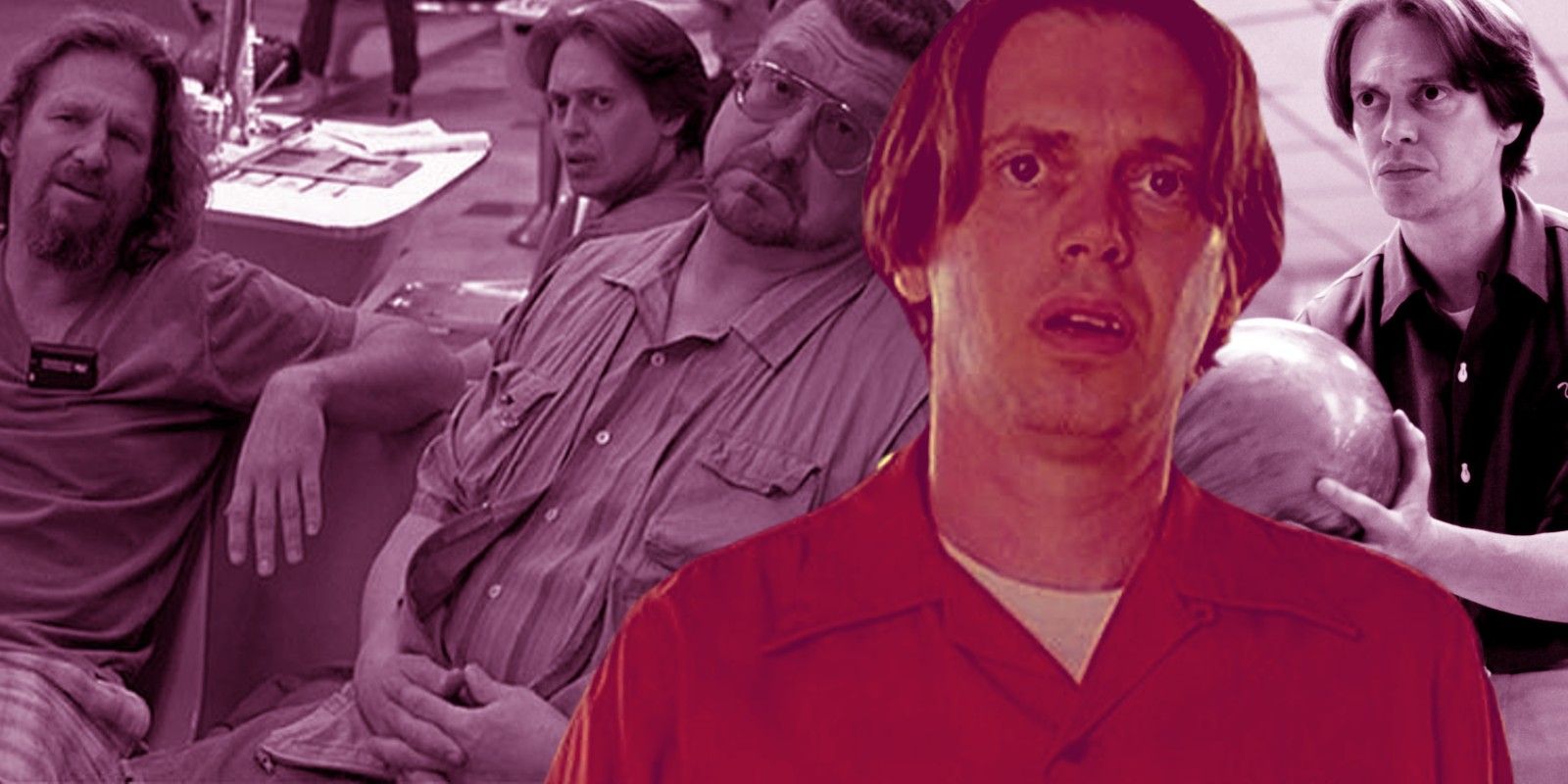
Donny was a good bowler. And a good man.
He was one of us. He was a man who loved the outdoors... and bowling. And as a surfer, he explored the beaches of Southern California, from La Jolla to Leo Carrillo and... up to... Pismo.
If you've seen the movie, you can hear Steve Buscemi’s silence and John Goodman’s unintentional ego through those words. The Big Lebowski ashes scene isn't just a bit of slapstick comedy buried in a Coen Brothers cult classic. It is the definitive moment where the film’s weird, rambling heart finally beats out loud. It’s messy. It’s gritty. It literally ends with a face full of cremated remains.
Most people remember the Folgers can. They remember the wind blowing the "modest receptacle’s" contents back into The Dude’s beard. But there is so much more happening in that clifftop eulogy than just a cheap gag about a coffee tin.
The Budget Funeral: Why a Folgers Can?
Let’s talk about the setup. Donny (played by Steve Buscemi) dies of a heart attack following a fight with a group of nihilists. It’s the only real "action" scene in the movie, and ironically, Donny dies without even being hit. He just gets overwhelmed.
When Walter and The Dude go to the mortuary, they are confronted with the soaring costs of death. The funeral director—played with a perfect, stiff-necked dryness by Dan Hedaya—lists the prices of urns. The "modest receptacle" costs $180.
Walter Sobchak, being Walter, takes offense. He views the price as a scam. To Walter, everything is an affront to his sensibilities or a connection to the Vietnam War. So, he does what any rational, high-strung veteran would do: he goes to the Ralphs grocery store and buys a large can of Folgers coffee.
It’s $15 vs $180.
This isn't just a joke about Walter being cheap. It’s a commentary on the entire film’s theme of "making do." The Dude lives in a world of rug-pissers and fake kidnappings. Why should Donny’s death be any more dignified than his life? He spent his life in the shadow of Walter’s shouting. It’s only fitting he spends his afterlife in a tin of pre-ground roast.
The Eulogy That Wasn't About Donny
The actual Big Lebowski ashes scene takes place on a windy bluff overlooking the Pacific. This is where the writing really shines.
Walter starts the eulogy, and within seconds, he has completely abandoned Donny. He starts talking about the Vietnam War. Again. He mentions the "Hill 364" and compares the death of a middle-aged bowler in a parking lot to the deaths of young men in the jungles of Southeast Asia.
"In your wisdom, Lord, you took him, as you took so many bright flowering young men at Khe Sanh, at Lang Dok, at Hill 364."
The Dude’s reaction is what sells it. Jeff Bridges doesn't say a word for the first half of the speech. He just looks at Walter with this expression of "Are you really doing this right now?"
It’s a masterclass in character dynamics. Walter is a man who cannot process grief without filtered trauma. He needs the war to make sense of the world. Donny’s death is senseless, so Walter forces it to be part of a larger, more heroic narrative. The tragedy isn't that Donny died; the tragedy is that even in death, he doesn't get to be the protagonist of his own funeral.
The Physics of the "Wind Incident"
Then comes the payoff.
Walter opens the can. He stands on the edge of the cliff. He throws the ashes into the air, expecting a majestic send-off into the Pacific surf.
The wind had other plans.
The ashes blow directly back onto The Dude. They cover his face, his sunglasses, and his beard. It’s disgusting. It’s visceral. It’s hilarious.
The Coen Brothers are known for their meticulous storyboarding. Every shot is planned. But the way the ashes (actually a mixture of flour and gray powder) clung to Jeff Bridges' face looked almost too perfect. You can see the genuine annoyance in The Dude’s eyes.
"God damn it, Walter!"
That line isn't just about the ashes. It’s the boiling point for the entire movie. The Dude has been shoved, drugged, threatened with a giant scissors-wielding nihilist, and had his rug ruined. The ashes are the final straw.
But watch what happens next. Walter tries to hug him. He says, "Everything’s a travesty with you, man!" and Walter just grabs him and says, "Come on, Dude. Let's go bowling."
And they do.
Why This Scene Defined a Subculture
The Big Lebowski ashes scene resonated so deeply that it actually changed how people think about funerals. Seriously.
There is a real-life "Church of the Latter-Day Dude" (Dudeism) with over 600,000 ordained "priests." For them, this scene is liturgical. It represents the idea that life is messy, and death is just as messy, so you might as well go bowling afterward.
It also highlights the "Little Man" theme. Donny represents the person who just wants to live their life and be left alone. He doesn't have a character arc. He doesn't have a grand purpose. He just bowls. In a Hollywood landscape obsessed with "meaning," the Coens gave us a scene that says sometimes there is no meaning. Sometimes you just end up on your friend's face after a botched eulogy.
Behind the Scenes: Fact vs. Fiction
There’s a common rumor that the ashes scene was a total accident and the wind shifted unexpectedly.
That’s mostly a myth.
While the exact pattern of the ash "spray" was unpredictable, the Coens specifically wrote the scene to include the wind blow-back. It was in the script. They wanted that specific beat of physical comedy to break the tension of the death.
Another interesting tidbit: Steve Buscemi’s character, Donny, is constantly told to "Shut the fuck up, Donny" by Walter. Fans have pointed out that in the film Fargo (another Coen movie), Buscemi’s character talks non-stop. Many believe Walter’s constant silencing of Donny was an inside joke responding to his previous role.
When you watch the Big Lebowski ashes scene, you’re seeing the end of that joke. Donny finally shuts up forever, and Walter still can't find the right words to say.
Impact on Modern Cinema
You see echoes of this scene in almost every "dark dramedy" that has come out since 1998. The idea of mixing profound grief with ridiculous physical failure is a staple of modern indie film.
Think about it.
Before The Big Lebowski, movie deaths were usually either tragic or slasher-flick scary. The idea that a funeral could be a "travesty" was somewhat taboo for a mainstream-adjacent film.
The Coens proved that you can respect a character while simultaneously covering his best friend in his remains for a laugh. It’s a delicate balance that few others have struck as well.
What We Can Learn From Walter’s Failure
If you’re looking for a takeaway from the Big Lebowski ashes scene, it’s probably about the futility of control.
Walter wants a perfect, military-esque send-off. He wants a "modest receptacle." He wants a speech that ties the 1990s back to the 1960s. He fails at all of it.
The Dude, on the other hand, just wants to move on.
Ultimately, the scene works because it’s honest. Funerals are awkward. People say the wrong things. The wind blows the wrong way. The most "human" thing you can do is wipe the dust off your face, forgive your idiot friend, and go get a beer.
Next Steps for Fans of the Movie
If you want to dive deeper into the lore of the film, you should actually look into the real-world location of that scene. It was filmed at Sunken City in San Pedro, California. It’s a beautiful, jagged landscape where the ground literally slid into the ocean years ago—a perfect metaphor for the movie itself.
- Visit Sunken City: If you go, be careful; it's technically a "no trespassing" zone in many areas due to the unstable cliffs, though hikers go there daily.
- Check the Script: Look up the original screenplay to see how the "wind" stage directions were written. It gives you a great look into the Coens' comedic timing.
- The Folgers Can: If you're a collector, vintage 1990s Folgers cans (the metal ones, not plastic) have become a niche item for Lebowski fans.
Donny was a good bowler. He really was. And maybe that's enough.