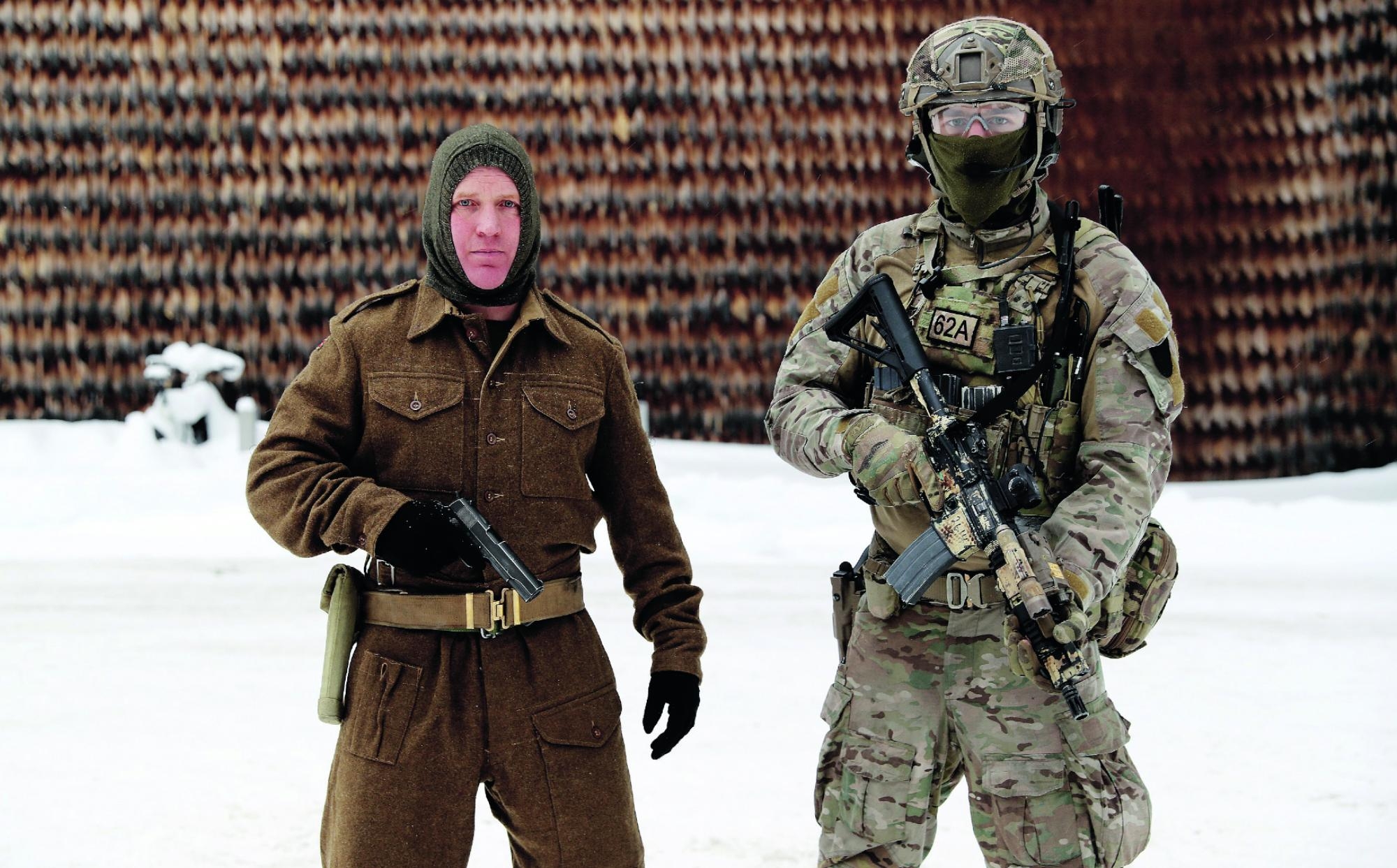
You’ve seen the images. Most people think of the Special Air Service (SAS) and immediately picture a gas mask, black kit, and a submachine gun. Or maybe the tan beret and sandy desert smocks of the Long Range Desert Group era. But there is another side to the Regiment. It’s the side that shows up at the Cenotaph or at high-level military dinners. The British SAS dress uniform is basically a masterclass in "quiet professional" style. It isn't as flashy as the Life Guards’ breastplates, but for those who know what they’re looking at, it tells a massive story about heritage.
The SAS is a unit that famously hates "bull." They aren't big on the parade ground shouting matches. However, when it comes to formal representation, they follow the rigorous standards of the British Army’s dress regulations while keeping those specific nods to their unique history.
The Beret and the Badge: The Soul of the Kit
The most recognizable part of any British SAS dress uniform—whether it’s the Number 1 Dress or the more common Number 2—is the beret. It’s sand-colored. Not tan, not beige. Sand. This was a hard-won distinction. Back in the early days of North Africa, the original SAS soldiers wore this color to blend into the desert. Later, they were forced to switch to the maroon beret of the Parachute Regiment. It wasn't until the 1950s that they got their sand color back.
The badge is just as vital. It’s a winged dagger. Often mistakenly called a flaming sword, it actually represents the sword of Damocles. The motto "Who Dares Wins" sits underneath. In dress uniform, this badge is usually embroidered or made of silver, depending on the specific "order" of the dress.
Why the "Sandy" Beret is Special
It’s about lineage. When an operator is in their Number 1 blues, that beret stands out like a sore thumb against the dark fabric. It’s a deliberate contrast. It says, "We are part of the system, but we are not the same as the system."
Number 1 Dress: The Peak of Formality
When you talk about the British SAS dress uniform in its most formal sense, you’re talking about Number 1 Dress. This is what you see at weddings, funerals, or when someone is being decorated by the King. It’s a dark blue—almost black—tunic and trousers.
The trousers have a specific stripe. For officers and senior NCOs, this is a thin red "welt" or a thicker stripe depending on the rank and the specific mess customs. But here’s the thing: you won't see a lot of SAS soldiers wearing this. Why? Because the SAS is a "pooled" regiment. Many operators are "sabre" soldiers who have been seconded from other parts of the Army.
If a guy from the Royal Engineers passes selection, he might keep his original cap badge for a while, but once he’s fully badged SAS, he adopts the Regimental dress. The Number 1 tunic is high-collared. It’s stiff. It’s the opposite of the loose-fitting Crye Precision trousers they wear in the field. It’s weird seeing guys who are trained to be ghosts looking like they’ve been poured into a Victorian-era mold.
The Mess Dress: Where the Real Tradition Lives
Honestly, the Number 2 dress (the khaki suit) is for the public. The Mess Dress is for the Regiment. This is what they wear for formal dinners in the mess at Stirling Lines. It’s much more "regency" in style.
The SAS mess dress is a short, waist-length jacket. It’s usually dark blue with "pompadour" blue facings. That specific shade of light blue is a hallmark of the Regiment. It’s paired with "tight" overalls—which are actually trousers with straps under the boots—and spurs for those of certain ranks. It looks incredibly "cavalry." That’s intentional. The British Army is obsessed with history, and the SAS, despite being the pinnacle of modern tech, loves its 18th-century vibes in the mess.
Rank is worn on the shoulder. Medals are miniatures. It’s all very refined. You’ll see the "SAS wings" on the right arm of the mess jacket. This is a big deal. In most regiments, badges go on the left. In the SAS, those wings are earned through one of the most brutal selection processes on earth, and they take pride of place.
Medals and Accoutrements
You can tell an SAS soldier by their chest. Not because they’re all built like tanks—though many are—but because of the "fruit salad." Because the SAS is the first unit into most conflicts, even a relatively young trooper might have a row of medals that would take a regular soldier twenty years to earn.
- The Campaign Medals: You’ll see the GSM (General Service Medal), ribbons for Iraq, Afghanistan, and more recently, various clandestine operations that fall under the "Operational Service Medal" umbrella.
- The Wings: As mentioned, the SAS parachute wings are distinct. They have a different shape than the standard Para wings.
- The Belt: In Number 2 dress, the "Stable Belt" is used. For the SAS, this is a simple, dark blue belt with a silver buckle. It’s understated.
Misconceptions About the British SAS Dress Uniform
People watch too many movies. They think the SAS walks around in black tactical gear all the time. They don't. In fact, many members of the Regiment prefer to stay in "civilian" attire even when on duty at the barracks to maintain a level of anonymity.
Another myth? That they wear the beige beret with civilian suits. That’s a big no. If they are in "civvies" for a memorial, they might wear a blazer with the Regimental crest, but the beret is strictly for uniform.
Also, the "Blue Dress" isn't unique to the SAS. Most of the British Army uses "blues" for their Number 1 dress. What makes the British SAS dress uniform stand out is the specific combination of the sand beret and the winged dagger. It’s the contrast between the standard-issue blue and the elite-tier headgear.
How to Spot the Real Thing
If you’re looking at a photo and trying to figure out if it’s a legitimate British SAS dress uniform, look at the details.
- The Fit: Real British uniforms are tailored. If it looks baggy or "off the rack," it’s likely a costume or a bad airsoft kit.
- The Wings: Look at the right shoulder. If the parachute wings are on the left, it’s not SAS.
- The Beret Shape: British soldiers take pride in the "bash" of their beret. It shouldn't look like a chef's hat. It should be pulled down tight over the right eye.
- The Medals: Check the order. There is a very specific "Order of Precedence" for British medals. If they’re in the wrong order, it’s a fake.
Why Uniformity Matters to the Elite
It seems like a contradiction. These guys are trained to think for themselves, to break rules, and to operate in the shadows. So why bother with the stiff collars and the polished brass?
It's about the "Regimental Family." When you put on that British SAS dress uniform, you aren't just a guy who’s good at shooting. You are part of a lineage that goes back to David Stirling in the sands of Libya. It’s a reminder that no matter how "special" you are, you’re still a soldier in His Majesty’s Armed Forces. It keeps the ego in check while maintaining the standards of the world’s most famous special forces unit.
Final Practical Insights for Collectors and Enthusiasts
If you’re looking into the world of militaria or just want to understand the kit better, keep these points in mind.
First, finding an authentic, issued SAS dress tunic is incredibly rare. Most operators keep theirs for life, or they are returned to the stores and stripped of insignia. Second, always verify the "provenance" of any winged dagger badge. There are thousands of fakes out there, but the genuine "Staybrite" or bullion versions have specific manufacturing marks.
For those wanting to see the uniform in person, the best bet is the SAS memorial at Hereford or the annual Remembrance Sunday parade in London. It is one of the few times the "quiet professionals" stand in the light, fully decked out in the history they’ve written.
If you are researching this for a project or collection, focus on the "Number 2" dress first. It’s the most common version seen in public and is the most accessible way to study the specific insignia placement and the unique "Stable Belt" configurations that define the SAS look. Always cross-reference with the official British Army Dress Regulations (Part 1 and 2) to see exactly how the Regiment adapts the general rules to fit their specific traditions.