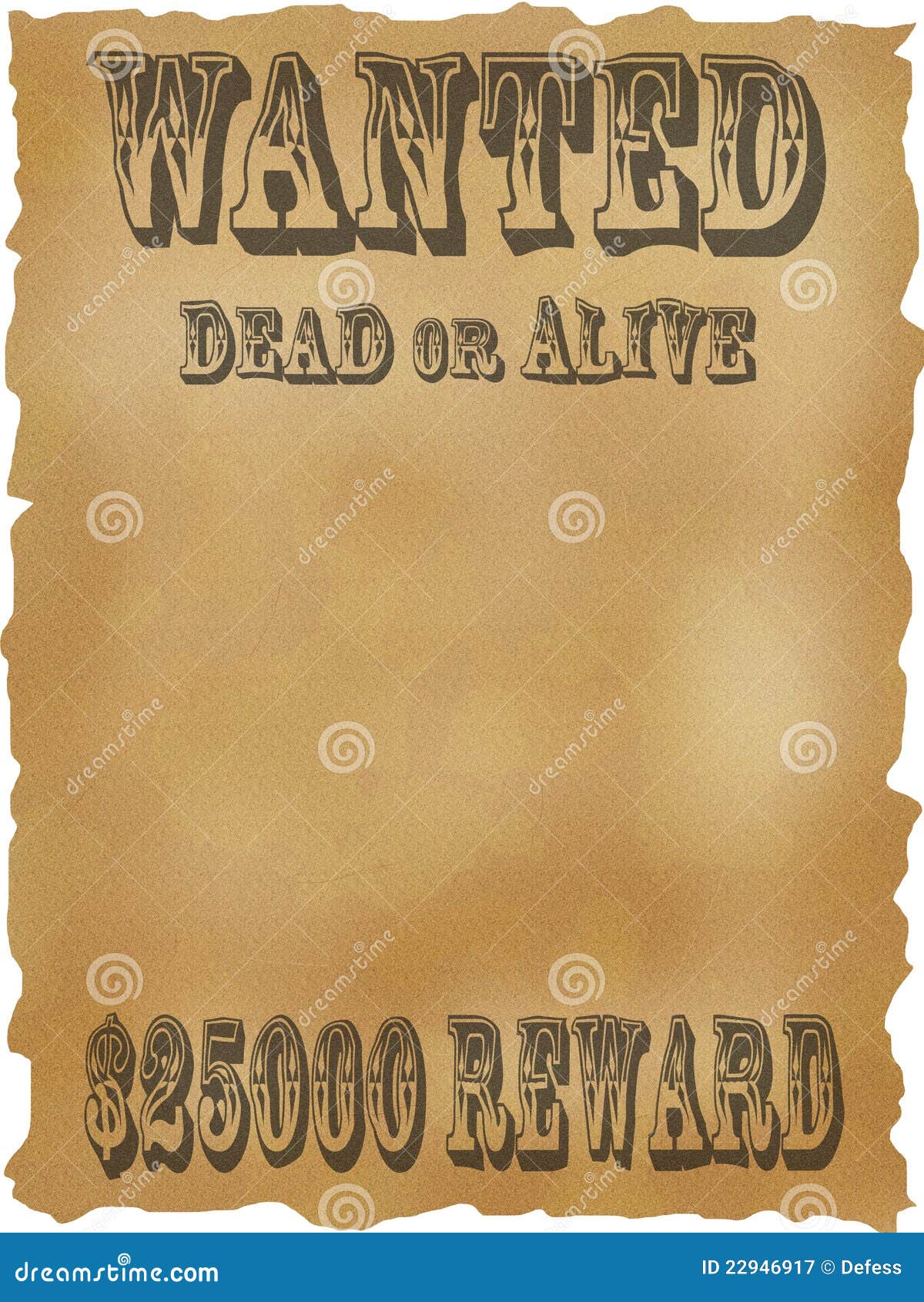
Walk into any teenager's bedroom or a curated "nerd cave" today and you're likely to see a gritty, yellowed piece of parchment staring back at you. It’s a dead or alive poster. Specifically, it’s probably a Straw Hat Pirate or a gritty outlaw from the Wild West. This isn't just about some weird obsession with old paper. It’s about the psychology of the bounty. We are obsessed with the idea of being "wanted," even if it’s by a fictional navy or a local sheriff from 1880.
The aesthetic of the bounty poster has transcended its original purpose. Back in the day, these were functional tools for law enforcement. They were cheap. They were disposable. Now? People pay fifty bucks for a high-quality canvas print of Luffy’s five-billion-berry bounty. It's kinda wild when you think about it. We’ve turned a "Help Wanted" ad for criminals into a cornerstone of modern pop culture decor.
The Real History of the Wanted Poster
Before we had facial recognition and digital databases, we had woodblock prints and rudimentary photography. The dead or alive poster wasn’t always the stylized masterpiece we see in movies. In the American Old West, these were often text-heavy and, honestly, pretty boring to look at. They were printed on whatever press was closest to the crime scene.
Take the case of Billy the Kid or Jesse James. Their posters weren't always "Dead or Alive." That specific phrasing was actually less common than you’d think. Often, it just stated a reward for "delivery to the sheriff." The "Dead or Alive" trope became a massive hit because of dime novels and, later, Hollywood. It added a layer of lethal drama. It told the public that the person on the paper was so dangerous that their breathing status didn't actually matter to the state.
Pinkerton National Detective Agency changed the game. They started using "Rogues' Galleries"—early collections of mugshots—to standardize how we looked at criminals. If you see a dead or alive poster today that looks "official," it’s likely mimicking the Pinkerton style. They understood that a face is easier to remember than a list of crimes.
One Piece and the Modern Resurgence
You can’t talk about this topic without mentioning Eiichiro Oda. His manga, One Piece, basically revived the dead or alive poster for an entire generation. In the world of One Piece, your bounty isn't just a threat. It’s a power level. It’s a status symbol.
When a character gets a new bounty, fans lose their minds. The posters are used as a narrative device to show growth. You see the updated number and you realize the stakes have shifted. This has translated into a massive market for physical merchandise. Fans don't just want a poster; they want the specific texture of "Aged Kraft Paper" to make it feel like it survived a sea voyage.
The design of the One Piece bounty poster is iconic. The word "WANTED" at the top in a bold, Western-style serif. The "DEAD OR ALIVE" subtext. The weathered edges. It’s a perfect mix of Wild West aesthetic and Japanese maritime fantasy. It works because it taps into our primal desire for recognition. To have a bounty is to be important enough for the world to notice you.
Why We Are Still Obsessed With the Aesthetic
There is something inherently tactile about a dead or alive poster that digital art just can't touch. It’s the "Wanted" font. It’s the sepia tones. It’s the faux-distressed edges that make you feel like you’re holding a piece of history, even if that history is 100% fake.
Interior designers call this "narrative decor." It’s a piece that tells a story. When someone sees a dead or alive poster on your wall, they don't just see art. They see an antagonist or a hero who went against the grain. It represents rebellion. Whether it’s Arthur Morgan from Red Dead Redemption or a historical figure like Butch Cassidy, the poster signifies a life lived outside the law.
The Anatomy of a Good Poster
If you’re looking to buy one or make one, don't settle for a glossy finish. Glossy is the enemy of the bounty poster. You want matte. You want tooth. You want that paper to look like it’s been through a dust storm in New Mexico.
- The Paper: 150g Kraft paper is the gold standard for that authentic, vintage feel.
- The Typography: Use woodblock-style fonts. Avoid anything that looks like it was made in Microsoft Word.
- The Photo: High contrast is key. The shadows should be deep, hiding just enough of the face to make it look slightly menacing.
Misconceptions About the Law and Bounties
A lot of people think these posters gave anyone the right to just go out and kill. That’s a myth. Mostly. In the real American West, "Dead or Alive" was a legal headache. Bringing in a body was a logistical nightmare and often resulted in less pay because of the difficulty in identification.
Actually, many "Dead or Alive" posters were only issued for the most high-profile cases where the individual had already been sentenced to death or was considered an immediate threat to the public. It wasn't a free-for-all for every petty horse thief. Lawmen preferred "Alive" because it meant a trial, and a trial meant the law was working. The "Dead" part was a last resort that the movies turned into a first choice.
How to Style a Dead or Alive Poster in Your Space
Don't just slap it on the wall with Scotch tape. That’s for college dorms. If you want it to look like a curated piece of entertainment history, you have to put in the work.
Frame it, but don't use a modern, sleek frame. Go for distressed wood. Something chunky. Or, if you want to be really extra, use magnetic wooden hangers. They give it that "hanging in the town square" vibe without ruining the paper.
Mix them. A single poster looks lonely. A "wall of infamy" looks like a collection. Grouping three or four posters of different sizes creates a visual anchor for a room. It tells the viewer that you’re not just a fan; you’re a collector of stories.
The DIY Route: Making Your Own
Can you make these at home? Yeah, easily. People use tea staining to age paper, which is a classic move. You brew some really strong black tea, soak the paper, and then bake it in the oven at a low temp for a few minutes. It smells like a kitchen but looks like the 1800s.
But here’s the pro tip: crumble the paper before you stain it. The tea settles into the creases and makes them darker, giving it that authentic "folded in a bounty hunter’s pocket" look. If you’re printing your own, look for "Wanted Poster" templates that allow you to upload your own photo. It’s a great gift, honestly. Putting your friend’s face on a dead or alive poster with a $0.05 reward is a top-tier move.
Real Examples of Iconic Posters
We’ve seen some legendary ones over the years. The "BOLO" (Be On The Look Out) posters of the modern era are the spiritual successors, but they lack the soul.
- The Joker (The Dark Knight): The "Why So Serious?" scrawled over a police sketch. It flipped the bounty poster on its head by making it a tool for the criminal rather than the law.
- The Mandalorian: The digital pucks are technically "posters," but notice how the show still went back to physical imagery for that grit.
- Portgas D. Ace: In the anime community, this is the holy grail. It’s tragic, it’s iconic, and it’s a massive seller at conventions.
Taking Action: What to Do Next
If you’re ready to add a dead or alive poster to your collection, don't just click the first link on a big-box retail site. Those are often low-res and printed on cheap, shiny paper that looks terrible under LED lights.
Check out independent artists on platforms like Etsy who specialize in "aged" prints. Look for keywords like "hand-distressed" or "heavyweight Kraft paper." If you're a DIY person, grab some 11x17 cardstock and start experimenting with the tea-staining method mentioned earlier. It’s a fun weekend project that yields way better results than a store-bought item.
For the collectors, focus on "sets." A single poster is a decoration; a series of posters from a specific era or franchise is a curated gallery. Start with the "protagonist" and then hunt for the "rival." It’s a more satisfying way to build out a space.
Always remember that the best dead or alive poster is the one that looks like it has a story to tell. If it looks too clean, it isn't finished yet. Give it some character, some wear, and a place of honor on your wall.