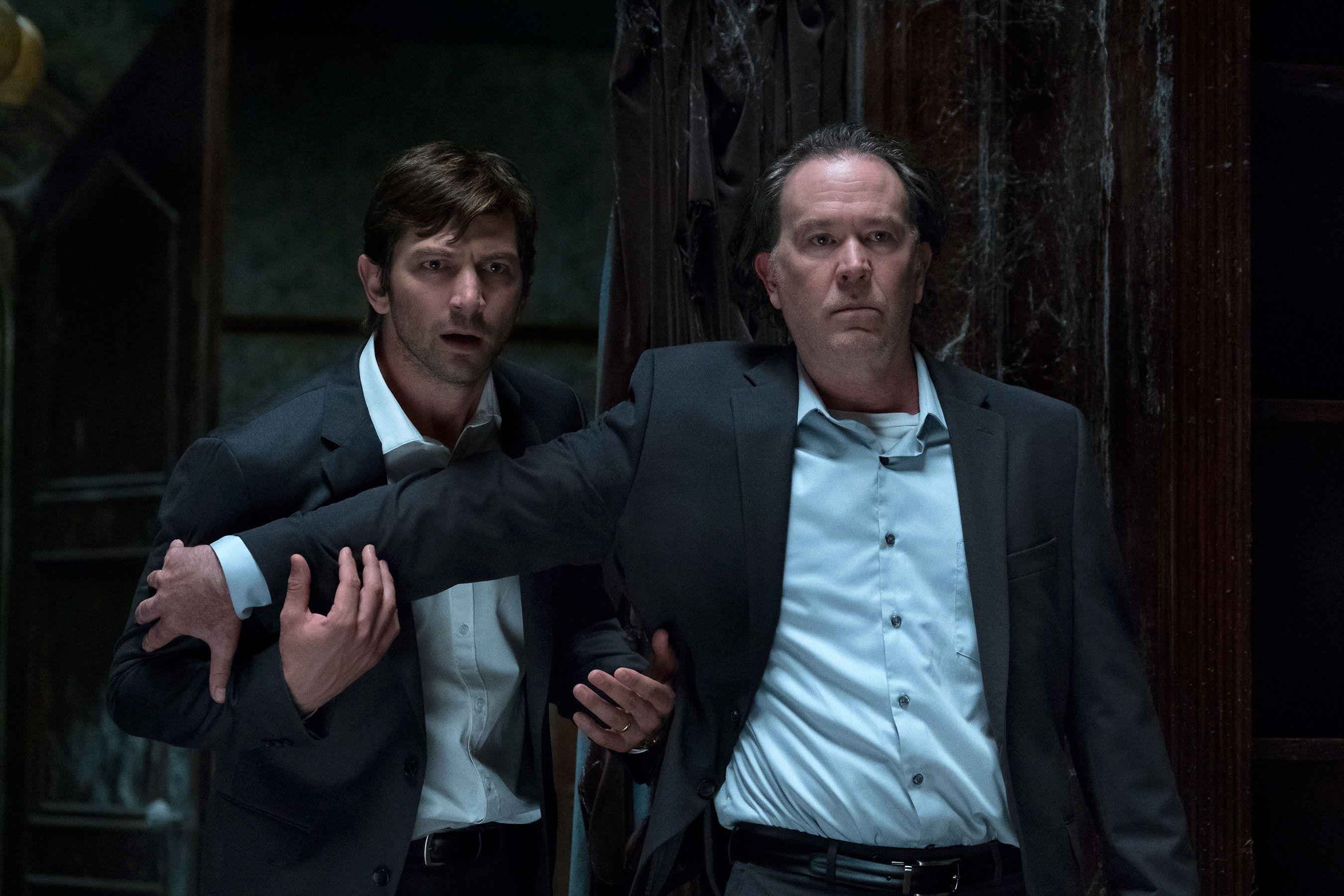
It has been years since the Crain family first stumbled into that rotting, sentient mansion, and honestly, horror TV hasn't really been the same since. When Mike Flanagan dropped The Haunting of Hill House Netflix series back in 2018, it didn't just scare people. It broke them. It’s a ghost story, sure, but it’s mostly a brutal autopsy of grief and how childhood trauma follows you around like a bent-necked lady in the dark.
Most horror shows rely on cheap jump scares. This one? It relies on the crushing realization that the person you love most might be the one haunting you.
The Bent-Neck Lady and the Burden of Knowing
Let’s talk about Nell. Poor, sweet Eleanor Crain.
The reveal in "The Bent-Neck Lady" remains one of the most devastating moments in modern television history. It wasn't just a twist for the sake of a twist. It was a closed-loop paradox of misery. When we finally see Nell hanging from the spiral staircase, realizing she has been the very ghost terrifying her since she was six years old, the horror shifts from external to internal. It’s a metaphor for depression that hits way too close to home.
You’ve probably noticed that the show doesn't treat the ghosts as just monsters. They are "confetti," as Nell says in the finale. Time isn't a line; it’s a falling handful of moments.
Why Hill House Works Better Than Most Horror
Most people don't realize how much technical wizardry went into this production. Take Episode 6, "Two Storms."
Flanagan and his team shot this almost entirely in long, sweeping takes. We’re talking nearly 20 minutes of continuous action without a visible cut. The actors had to rehearse for weeks. If someone tripped or missed a mark 15 minutes in, they had to scrap the whole thing and start over. This wasn't just for show. It creates this suffocating, claustrophobic energy where you can't look away. You’re trapped in the funeral home with the Crains, watching them fall apart in real-time while a literal storm rages outside and a metaphorical one rips the family to shreds inside.
The writing is dense. It’s smart. It respects the audience.
It’s also surprisingly grounded in literature while being its own beast. While it takes the name and some character cues from Shirley Jackson’s 1959 novel, the plot is almost entirely original. Jackson’s book was a psychological study of a lonely woman; Flanagan’s version is a sprawling family epic. It’s a rare case where changing the source material drastically actually worked in the show’s favor.
The Background Ghosts You Probably Missed
Seriously, go back and rewatch it.
The show is famous for its "hidden ghosts." In almost every scene inside the house, there is a pale face peeking out from behind a door, a pair of hands under a piano, or a tall figure standing in the shadows of a hallway. They don't jump out. They don't scream. They just... exist.
- In the scene where Steven and Hugh are running through the hall, a ghost is tucked behind the ladder.
- When Theo is dancing in the dark, hands are visible under the furniture.
- Look behind the glass doors in the kitchen.
This creates a pervasive sense of being watched that sticks with the viewer long after the episode ends. It builds a layer of subconscious dread. You stop looking at the characters and start scanning the corners of your own room.
The Five Stages of Grief represented by the Crain Siblings
This is a popular theory that Flanagan himself has acknowledged. Each of the five siblings represents a stage of the Kübler-Ross model.
- Steve (Denial): He writes about ghosts but refuses to believe in them. He explains everything away with science or mental illness.
- Shirley (Anger): She is perpetually pissed at her father, her siblings, and the world. She hides her pain behind a rigid, controlling exterior.
- Theo (Bargaining): She uses her "touch" and her gloves to keep the world at a distance, trying to find a middle ground where she doesn't have to feel the overwhelming weight of others' emotions.
- Luke (Depression): He numbs himself with heroin. He is the most visibly broken by the house, literally trying to drown out the darkness.
- Nell (Acceptance): She is the only one who truly looks at the house for what it is. Ultimately, she is the one who tries to bring the family together, accepting her fate to save them.
It’s a neat structural trick that gives the show an emotional backbone many slasher flicks lack.
The Controversy of the Ending
Not everyone loved the ending.
The "Red Room" reveal—that it was a "stomach" digesting the family by giving them what they wanted—was brilliant. It explained why the room changed for everyone: a dance studio for Theo, a game room for Steve, a treehouse for Luke. The house was feeding.
However, some fans felt the final resolution in the "bright" version of the Red Room was a bit too "Hallmark" for a show that had been so relentlessly bleak. The original plan was reportedly much darker. Flanagan has mentioned in interviews that they considered having the window in the background of the final "happy" scene be the same vertical rectangle from the Red Room, implying the family never actually escaped.
They decided against it. They felt the Crains had suffered enough.
Honestly? It was the right call. After ten hours of watching a family get pulverized by trauma, a little bit of hope felt earned, even if it felt slightly out of step with the genre's usual tropes.
Addressing the "Flanagan Monologue"
If you've watched Midnight Mass or The Fall of the House of Usher, you know Mike Flanagan loves a monologue. In The Haunting of Hill House Netflix fans, this is where that habit started.
Some people find it pretentious. They think people don't talk like that in real life. And they're right—nobody delivers a five-minute speech about the nature of death while standing in a kitchen. But this isn't realism. It’s Gothic horror. It’s operatic. The monologues are meant to be poetic reflections of the characters' internal states. When Mr. Dudley talks about his wife and their lost child, it’s heartbreaking because of the words, not just the jump scares.
Technical Stats and Legacy
- Rotten Tomatoes: It holds a high critical score, often hovering around 93%.
- Stephen King's Take: The master of horror himself called it "close to a work of genius."
- Cinematography: Michael Fimognari’s use of color—the cold blues of the present day versus the warm, deceptive golds of the past—tells the story as much as the dialogue does.
The show changed the "Netflix Original" landscape. It proved that high-concept, big-budget horror could work as a limited series. It paved the way for the "Flanaverse," leading to The Haunting of Bly Manor, though many would argue Hill House remains the superior entry due to its tighter pacing and more relatable core conflict.
How to Get the Most Out of a Rewatch
If you're going back in, do yourself a favor and pay attention to the set design. The house is a character. The wallpaper patterns often look like screaming faces. The statues move their heads when the camera isn't directly on them.
Also, watch the eyes. The casting of the younger and older versions of the siblings is eerie. They didn't just find actors who looked alike; they found actors who shared the same tics and mannerisms. Victoria Pedretti (Nell) and Julian Hilliard (Young Nell) are particularly uncanny in how they mirror each other’s vulnerability.
The real "monster" of Hill House isn't the Tall Man or the woman in the basement. It's the "black mold" of family secrets. It’s the way we stop talking to each other because it hurts too much to remember.
Practical Steps for the Horror Fan
If you've finished the series and are looking for something to fill that void, here is the path forward.
First, read the original Shirley Jackson novel. It is a completely different experience—shorter, more ambiguous, and deeply unsettling in a quiet way. It’ll give you a new appreciation for the Easter eggs in the show, like the "cup of stars" reference.
Second, check out Flanagan's earlier film Oculus. You can see the seeds of Hill House there: the shifting timelines, the haunted object that gaslights its victims, and the tragedy of a brother and sister trying to process a shared childhood nightmare.
Finally, if you’re into the technical side, watch the "Behind the Scenes" featurette on the making of Episode 6. Seeing the camera operators and actors coordinate that "dance" through the funeral home is mind-blowing. It makes you realize that the most frightening thing about the show isn't the ghosts—it's the sheer amount of work it took to make them look that real.
The show remains a landmark of the genre because it understands a simple truth. We don't fear the dark because of what's in it. We fear the dark because of what it reveals about us. Hill House is still standing, and for those of us who have walked its halls, it never really lets us go.