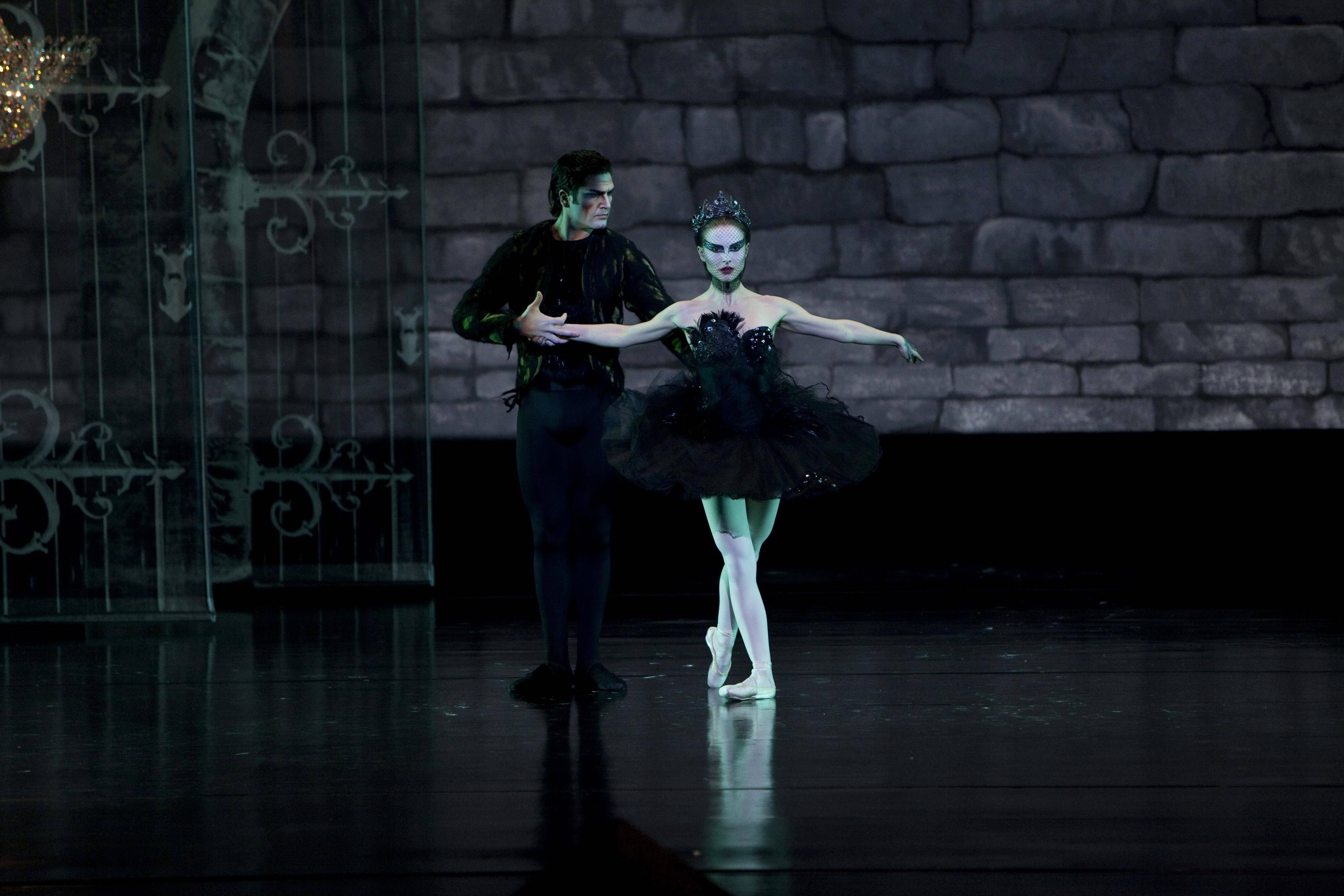
It’s been over a decade since Darren Aronofsky’s psychological nightmare hit theaters, and people still can't stop talking about it. Specifically, that one moment. You know the one. The lesbian scene from Black Swan between Natalie Portman’s Nina Sayers and Mila Kunis’s Lily. It wasn't just some cheap tactic for views, even if the tabloids at the time treated it like one.
Honestly? It’s basically the hinge the entire movie swings on.
Most people remember the feathers growing out of Nina’s skin or the gruesome hangnail moment. But the sequence with Lily is where the psychological horror actually gets real. It's the point where Nina finally loses her grip on what’s actually happening and what she’s just making up in her fractured, perfectionist brain.
The lesbian scene from Black Swan wasn't even "real"
Here is the thing a lot of viewers missed during their first watch: Nina is an unreliable narrator. Like, extremely unreliable.
When we talk about the lesbian scene from Black Swan, we’re talking about a hallucination. Nina is so repressed, so smothered by her mother (played with terrifying precision by Barbara Hershey), and so desperate to find her "Black Swan" persona that her mind literally invents a sexual awakening.
She needs to be "loose." Thomas Leroy, the artistic director, keeps telling her she’s too rigid. She’s a perfect White Swan—technically flawless but emotionally dead. To become the Black Swan, she thinks she needs to be like Lily. Lily is messy. Lily eats burgers. Lily has tattoos and, in Nina's mind, a liberated sexuality.
So, Nina’s brain does what brains under extreme stress do. It breaks.
The morning after their "night out," Nina wakes up late, panicked, and sees Lily in her bed. But when she gets to the studio, Lily is already there, completely oblivious. She tells Nina she went home with some guy from the club. The realization hits Nina—and the audience—like a physical punch. She didn't just have a wild night; she had a psychotic break.
Why the "double" trope matters here
Aronofsky loves a good doppelgänger. In this specific sequence, Lily isn't just a rival; she's the version of Nina that Nina is terrified of becoming and desperately wants to be.
If you look closely at the cinematography by Matthew Libatique, the mirrors are everywhere. The rehearsal spaces, the dressing rooms, Nina's pink-saturated bedroom. The movie is obsessed with reflections. During the lesbian scene from Black Swan, the camera moves in a way that makes it hard to tell where one body ends and the other begins. It’s intentional. It’s about Nina trying to "consume" Lily’s essence to improve her dance.
It’s messy. It’s dark. It’s kinda tragic.
Portman and Kunis: The reality behind the camera
Let’s be real for a second—the media went absolutely feral over this. Back in 2010, the "sexy thriller" was a massive marketing hook. But for the actors, it was a grueling, miserable experience. Natalie Portman famously lost 20 pounds for the role, eating little more than carrots and almonds. She was constantly injured.
Portman later told Entertainment Weekly that the filming was "extremely difficult." She and Kunis were actually friends in real life, which you’d think would make a sex scene easier. Usually, it’s the opposite. It’s awkward.
- They spent 15 hours a day dancing.
- The budget was tiny—around $13 million.
- Aronofsky reportedly tried to pit the two actresses against each other in real life to create "authentic" tension.
- He would tell Portman, "Mila is doing so well," while telling Kunis the opposite.
This tension bled into the lesbian scene from Black Swan. It doesn't feel like a standard Hollywood romance because it isn't one. It’s a power struggle. It’s about Nina’s desperation to possess the qualities she thinks Lily has.
The "Male Gaze" vs. Psychological Horror
There’s a valid criticism that the scene leans into the male gaze. It’s a high-profile movie with two A-list stars in a graphic sequence. Of course, that’s going to draw a specific kind of attention.
However, many film scholars argue it transcends that. Because the scene ends with the revelation of Nina’s mental collapse, the "eroticism" is immediately undercut by horror. You aren't supposed to feel good after watching it; you’re supposed to feel disoriented. It’s a violation of Nina’s own reality.
What it says about the "Perfect Girl" trope
Nina is the ultimate "good girl." Her room is a nursery. She’s surrounded by stuffed animals and a mother who treats her like a child. The lesbian scene from Black Swan represents the violent death of that persona.
In Nina's world, sex isn't about pleasure. It’s a tool for artistic transformation. That’s why the scene is so aggressive. It’s not a tender moment between two women; it’s Nina’s psyche trying to claw its way out of a pink, stuffed-animal-filled cage.
Critics like Roger Ebert noted at the time that the film is basically a "body horror" movie disguised as a prestige drama. The sex scene is just another form of body horror—it’s Nina’s identity being ripped apart.
The legacy of the Black Swan effect
After the movie came out, "Black Swan" became a cultural shorthand for "going off the deep end" in pursuit of a goal. We see it in how we talk about athletes, artists, and even corporate leaders.
The lesbian scene from Black Swan remains the most searched part of the movie, but its context is what keeps the film in the "Top 100" lists. Without the psychological buildup, it’s just a scene. With the buildup, it’s a tragedy.
If you’re revisiting the film today, pay attention to the sound design during that sequence. The whispers, the distorted music, the way the ambient noise drops out. It’s designed to make you feel as isolated as Nina is.
Actionable ways to analyze the film’s themes
To truly understand the depth of what Aronofsky was doing beyond the headlines, look for these specific "tells" during your next rewatch:
- Check the mirrors. Almost every time Nina sees Lily in a sexual or aggressive context, there is a mirror or a window nearby. It’s a constant reminder that she is looking at a distorted version of herself.
- Watch the color palette. Nina starts in white and pink. As her obsession with Lily—and the events leading to the lesbian scene from Black Swan—intensifies, her wardrobe shifts to greys and blacks.
- Listen to the score. Clint Mansell’s rework of Tchaikovsky’s Swan Lake becomes more discordant and "broken" as Nina’s mind fractures.
- Note the scratches. Nina’s physical self-harm (the scratching on her back) always gets worse after she "interacts" with Lily. It’s the physical manifestation of her internal guilt.
The film isn't just a movie about ballet. It’s a movie about the cost of perfection. It’s about how we can become so obsessed with a goal that we hallucinate our own lives. The lesbian scene from Black Swan isn't a detour; it’s the moment the protagonist finally loses the war with herself.
If you want to understand the psychological layers of the film, watch it again through the lens of Nina as a person suffering from a profound lack of self-identity. Every "erotic" or "scary" moment is just Nina trying to find where she begins and her art ends. It’s a lonely, terrifying place to be.