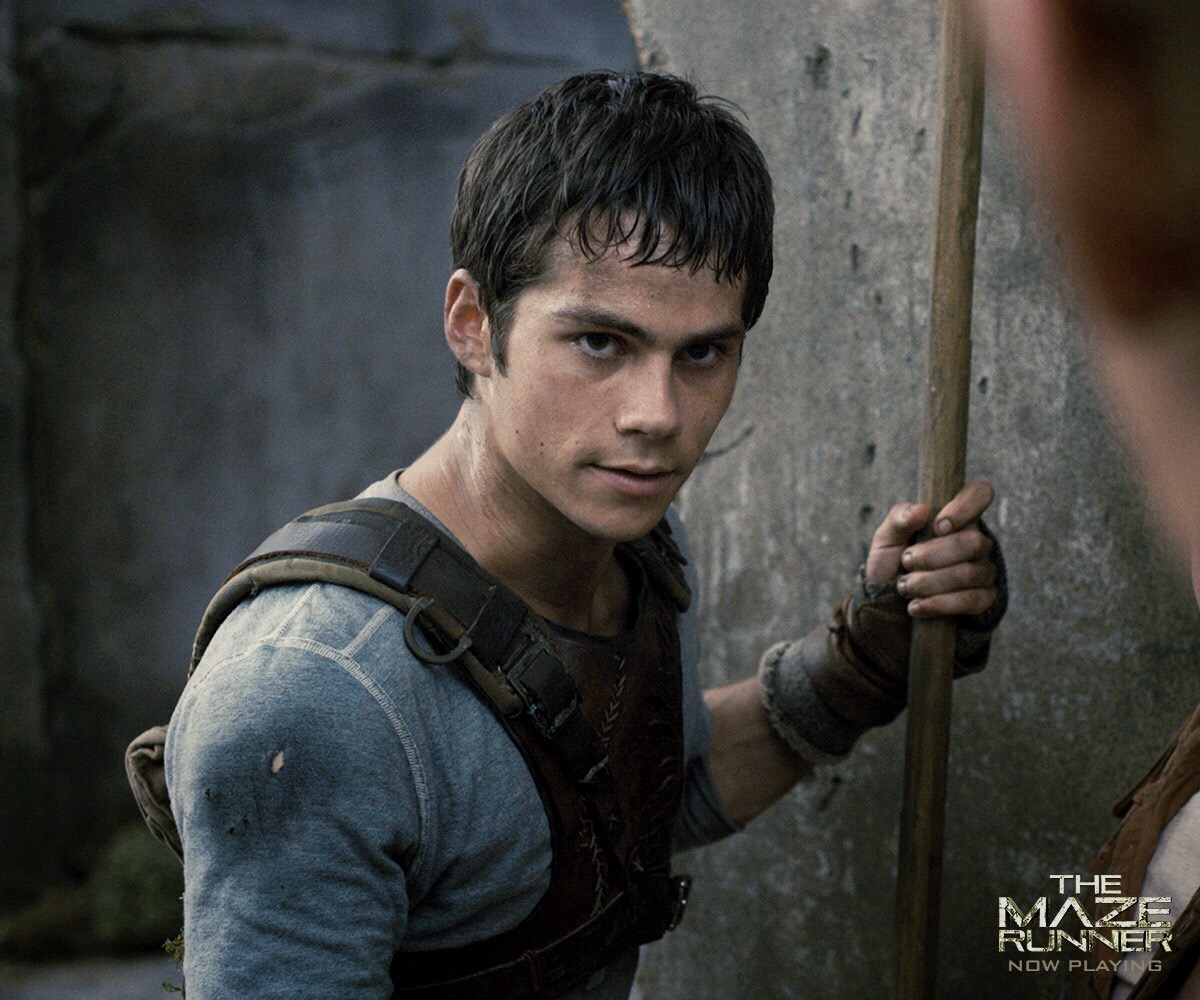
Honestly, it’s been over a decade since James Dashner’s world first hit the big screen, and people still can’t stop talking about that giant concrete box. You remember the vibe. It was 2014. We were all knee-deep in dystopian trilogies, but The Maze Runner felt meaner. It felt tighter. While other franchises were busy with love triangles and shimmering gowns, this movie dropped a bunch of sweaty, terrified teenage boys into a literal death trap and told them to run.
It worked.
The premise of The Maze Runner is deceptively simple: Thomas wakes up in a rusty elevator with no memory, arriving in "The Glade," a massive courtyard surrounded by high stone walls. Every morning, the walls open. Every night, they close. And inside that maze? Things that click and scream in the dark.
The mechanics of the Glade that everyone forgets
Most people remember the Grievers—those horrifying biomechanical slugs—but they forget how the Glade actually functioned as a society. It wasn’t just a bunch of kids running around screaming. Alby and Newt had a system. You had the Baggers, the Slicers, the Med-jacks, and of course, the Runners. It was a functional, albeit desperate, microcosm of civilization.
Director Wes Ball did something risky here. He took a relatively modest budget—somewhere around $34 million—and made it look like a $150 million blockbuster. He used his background in visual effects to make the maze feel heavy. When those doors move, you feel the vibration in your teeth.
That’s the secret sauce.
If the maze felt like a cheap CGI set, the stakes would have vanished. Instead, the production design used real, grit-under-the-fingernails sets in Louisiana. They actually dealt with venomous snakes on set during filming. That tension? It wasn't just acting. It was the reality of filming in a swamp while trying to pretend you're in a futuristic hellscape.
Why Thomas was the worst thing to happen to them
Thomas, played by Dylan O'Brien, is the catalyst. Before he shows up, the Gladers had a peace treaty with their own fear. They stayed put. They survived.
Then comes Thomas.
He’s curious. He’s impulsive. He breaks the number one rule: never go out into the maze at night. When he slides between those closing doors to help Alby and Minho, the status quo doesn't just crack; it shatters. It’s a classic "disruptor" narrative, but it’s handled with a lot of nuance. You can actually see why Gally, the supposed villain, is so pissed off. Gally wanted safety. Thomas wanted the truth. Usually, in these movies, the truth costs everyone their lives.
Let’s talk about those Grievers for a second
We need to address the creature design. In the book, the Grievers are described as a "blur of fat and hair" with mechanical arms. The movie pivoted. It turned them into these terrifying, arachnid-like cyborgs with needles and shears.
It was a smart move.
The sound design—that rhythmic, metallic clicking—became a psychological trigger for the audience. It’s the sound of "you shouldn't be here." Most YA movies of that era shied away from true horror elements, but The Maze Runner leaned into them. It felt more like Lord of the Flies met Aliens than it did The Hunger Games.
The scene where Thomas kills the first Griever by using the closing walls of the maze is a masterclass in tension. No superpowers. No "chosen one" magic. Just physics and a lot of sprinting.
The WICKED problem
Then there’s the ending. "Wicked is good."
The reveal that the entire world had been scorched by solar flares—the "Flare"—and that these kids were basically laboratory rats being tested for a cure to a brain-eating virus was a hard pivot. It shifted the genre from a survival thriller to a post-apocalyptic sci-fi conspiracy. Some fans of the book were annoyed by the changes to the "telepathy" plot point, but for the film, cutting the psychic link between Thomas and Teresa was probably for the best. It kept the movie grounded in a physical reality.
What we can learn from the production today
Looking back, the success of The Maze Runner was a bit of an anomaly. It didn't rely on a massive A-list star at the time. Dylan O'Brien was "the guy from Teen Wolf," and Will Poulter was "the kid from Narnia." But the casting was impeccable.
Ki Hong Lee as Minho gave us one of the coolest, most capable secondary leads in the genre. Thomas Brodie-Sangster brought a weary, old-soul energy to Newt that made the emotional stakes feel heavy.
They weren't playing "movie teenagers." They were playing soldiers who didn't know who they were fighting for.
Critical reception vs. Reality
Critics were surprisingly kind to it, considering the "YA fatigue" that was setting in by 2014. It holds a respectable 65% on Rotten Tomatoes, but its audience score is much higher. Why? Because it respects the audience's intelligence. It doesn't over-explain the world in the first five minutes. It lets you feel as confused and claustrophobic as Thomas.
The movie also avoids the "middle-movie slump" that plagued Divergent or The 5th Wave. It had a clear beginning, middle, and a cliffhanger that actually made you want to see The Scorch Trials.
Practical insights for your next rewatch
If you’re going back to watch The Maze Runner tonight, keep an eye on the background. The "Glade" code of conduct is etched into the walls, and the names of the "dead" Gladers are visible in several shots, adding a layer of history that isn't explicitly spoken.
Pay attention to the color palette. Notice how the Glade is lush, green, and "safe," while the Maze is cold, grey, and oppressive. It’s basic color theory, but it’s executed flawlessly to keep your anxiety levels up.
Take Action:
- Compare the Maze: If you've only seen the movie, go back and read the first 50 pages of the book. The way the "Changing" is described is far more visceral and changes how you view Alby's character.
- Track the VFX: Look for Wes Ball’s "shorts" on YouTube (like RUIN). You can see the exact visual DNA that allowed him to make this movie look so expensive on a budget.
- Focus on Gally: On a second watch, try to see the story from Gally's perspective. He isn't a villain; he’s a guy trying to protect his home from a newcomer who keeps attracting monsters. It changes the entire dynamic of the final act.