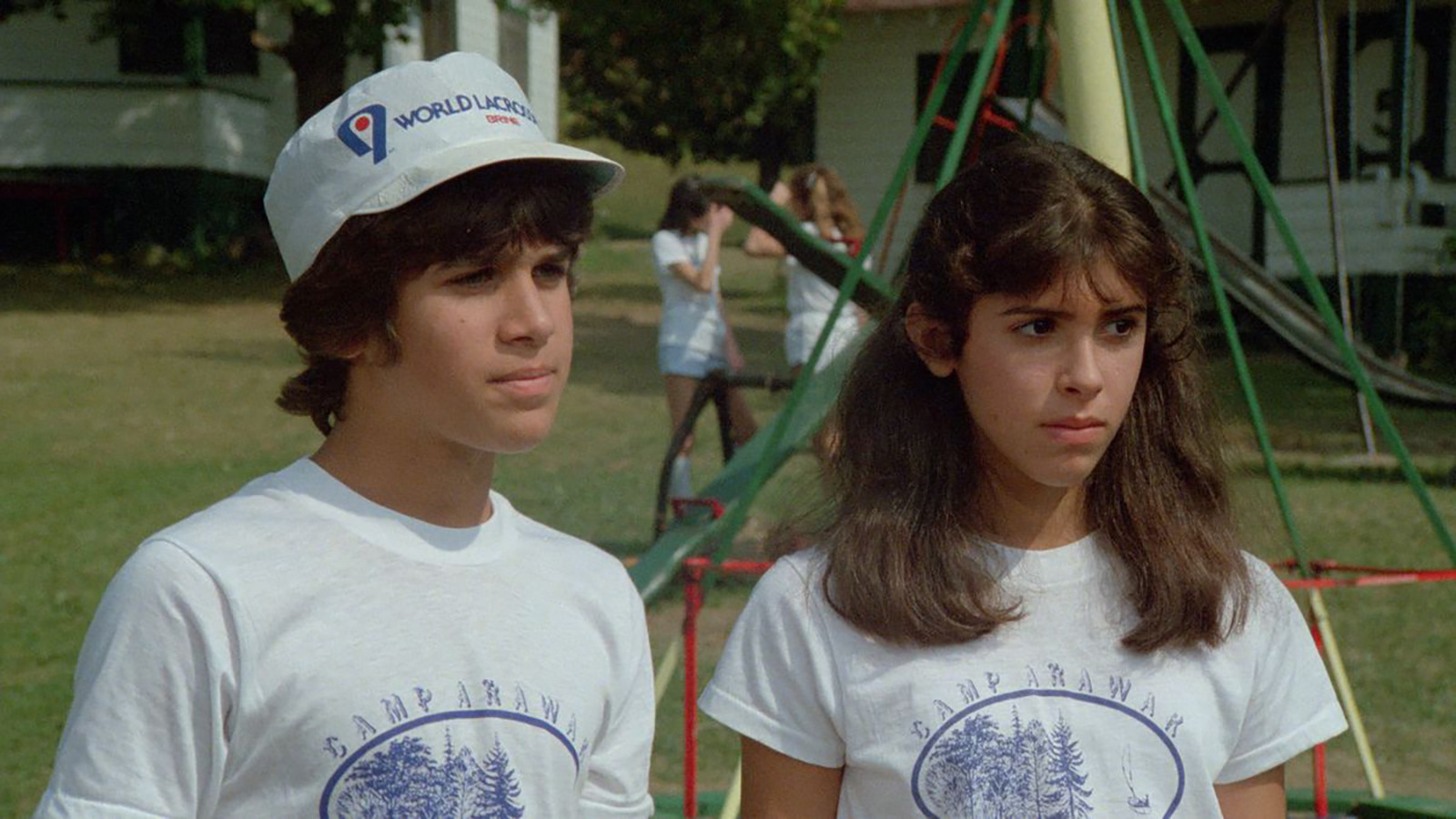
Honestly, if you grew up watching 80s slashers, you probably remember the exact moment your brain short-circuited. It wasn't because of a masked killer in a hockey mask or a guy with knives for fingers. It was that frozen, grain-heavy shot of Angela Baker standing by the lake. The sleepaway camp ending scene is arguably the most jarring, controversial, and debated three minutes in the history of the subgenre. It’s a moment that fundamentally changed how we look at gender, trauma, and the "final girl" trope.
Even today, in 2026, horror buffs still argue about it. Was it a cheap shock? Or was it a brilliant, albeit messy, subversion of everything we expected from a low-budget summer camp movie?
Robert Hiltzik, the writer and director, didn't have a massive budget. He didn't have CGI. He didn't even have a clear path to a sequel when he shot the film in 1983. What he had was a singular image that he knew would stick. And boy, did it stick. It sticks because of that sound—that weird, guttural, animalistic growling—and the look on Felissa Rose's face. Well, technically, it wasn't even Felissa Rose in that final reveal, but we'll get into that.
The Mechanics of the Sleepaway Camp Ending Scene
Let’s talk about what actually happens. After a series of increasingly creative murders at Camp Arawak—think boiling water, bees, and curling irons—we’re led to believe that Ricky is the killer. It makes sense, right? He’s protective, he’s angry, and he’s always around when things go south. But then we get to the shore.
Ronnie and Susie find Angela and Paul by the water. The sun is coming up. It should be the moment of rescue. Instead, Angela stands up. She’s naked. She’s holding a blood-covered hunting knife. And then the camera drops lower to reveal that Angela is biologically male.
The reveal is punctuated by a chilling, distorted hiss. It isn’t a scream. It’s a sound that feels like it’s coming from somewhere else entirely. Most people don't realize that the person standing there in that wide shot was actually a local college student wearing a mask of Felissa Rose’s face. Why? Because Rose was a minor at the time, and the production couldn't legally show her in that state. That mask is part of why the scene feels so uncanny. It’s literally a frozen, dead-eyed version of a human face, which adds a layer of "Uncanny Valley" horror that Hiltzik probably didn't even intend.
Trauma as the Catalyst for Camp Arawak’s Body Count
We have to look at the "Aunt Martha" factor. This isn't just a twist for the sake of a twist; it's a story about a kid being forced into a psychotic break by a guardian. After the boating accident that killed Peter and his father, Martha decided she "already had a boy" and wanted a girl. She raised Peter as Angela.
This is where the sleepaway camp ending scene shifts from a simple slasher reveal to something much darker. It's a depiction of extreme psychological abuse. Angela isn't a killer because she's trans—honestly, the movie doesn't even frame her as trans in the modern sense. She’s a victim of "maternal" projection. Martha literally programmed a child to forget their identity.
The kills throughout the movie are almost all reactions to sexual pressure or bullying. Every time Angela feels "exposed" or threatened by the emerging reality of her body, someone dies. The ending is the moment that suppression finally snaps. She isn't just killing Paul at the end; she's destroying the very idea of the "romance" she was forced to perform.
Why the FX and Sound Design Still Work
Modern horror relies on jump scares. Sleepaway Camp relies on a total tonal shift. The movie is mostly a bright, sun-drenched, slightly awkward teen comedy-drama for 80 minutes. The colors are vibrant. The shorts are very, very short. It feels like a standard Friday the 13th rip-off.
Then the ending hits.
The transition from the campfire warmth to the cold, blue-grey light of the morning by the lake is intentional. It strips away the "summer fun" facade. The sound design is the real MVP here. That growl wasn't scripted to be as terrifying as it turned out. It was a happy accident in the editing room where they slowed down a human scream and layered it with animal noises.
It creates a sensory overload. You’re trying to process the visual information—the nudity, the blood, the decapitated head—while your ears are being assaulted by a noise that sounds like a malfunctioning engine. It’s a primitive fear response. You aren't thinking about the plot anymore. You're just thinking, "Get me away from this thing."
Cultural Impact and Modern Re-evaluations
Look, we have to address the elephant in the room. In 2026, the way we talk about gender is light-years ahead of where it was in 1983. Many critics today look back at the sleepaway camp ending scene and find it problematic. They argue it links "gender non-conformity" with "monstrosity."
However, there’s another school of thought among horror scholars. Some see Angela as a queer icon of sorts—a person who was pushed to the brink by a heteronormative society and fought back in the most extreme way possible. Felissa Rose herself has spoken at countless conventions about how fans from all walks of life have found a weird sort of empowerment in Angela.
It’s a complicated legacy. It’s not a "clean" movie. It’s messy, it’s sweaty, and it’s deeply uncomfortable. But that discomfort is exactly why we’re still talking about it. Most slashers from that era have faded into obscurity. Who remembers the ending of The Final Exam or Don’t Go in the Woods? Nobody. But everyone remembers Angela.
Common Misconceptions About the Finale
- The "It was a twin" theory. Some people think Angela and Peter were twins and the "wrong" one died. No. The movie is pretty clear: Peter lived, Angela died. Peter became Angela because Martha is unhinged.
- The "Felissa Rose was actually there" myth. As mentioned, that's a prosthetic mask on a male body for the wide shot. The close-up of the face is Felissa, but the "reveal" shot is a double.
- The sequels change the ending. Technically, Sleepaway Camp II: Unhappy Campers and Sleepaway Camp III: Teenage Wasteland (starring Pamela Springsteen) lean much harder into the "Angela is a trans woman" narrative, but they play it for dark comedy. They almost ignore the psychological trauma of the first film's finale to turn Angela into a moralistic punisher.
How to Experience the Scene Today
If you’re going to watch it, find the Shout! Factory Blu-ray or a high-quality 4K restoration. Seeing the film in its original grain is vital. The "dirtiness" of the film stock contributes to the feeling that you’re watching something you shouldn’t be seeing. It feels like a snuff film for a few seconds.
When you watch it, pay attention to the editing. The way it cuts from Ronnie’s horrified face back to Angela’s frozen snarl is a masterclass in pacing. It doesn't linger long enough for you to see the seams of the mask, but it lingers just long enough to burn the image into your retinas.
Final Insights for Horror Enthusiasts
The power of the sleepaway camp ending scene lies in its refusal to offer closure. Most horror movies end with the killer being defeated or a final "stinger" where they jump out at the camera. Sleepaway Camp just... stops. It leaves you with that growling sound and a sense of profound unease.
To truly appreciate the impact, you should:
- Watch the film chronologically without skipping to the end. The "twist" only works if you've endured the 80 minutes of campy dialogue and short-shorts.
- Compare it to Psycho (1960). Both films use gender and "mother issues" as a pivot point for horror, but Sleepaway Camp removes the clinical explanation at the end, leaving only the raw trauma.
- Listen to the commentary tracks. Robert Hiltzik and Felissa Rose provide incredible context on how they managed to pull off such a high-impact scene on a shoestring budget.
- Analyze the "Final Girl" trope. Angela technically survives, but she isn't the hero. This flipped the script on what audiences expected from a female survivor in 1983.
The scene remains a testament to the idea that a single, bold choice can define a film's entire legacy. It isn't a "good" ending in terms of traditional storytelling, but it is an unforgettable one. It forces the viewer to confront the reality that the monsters we create through abuse and control are far more terrifying than any supernatural entity.