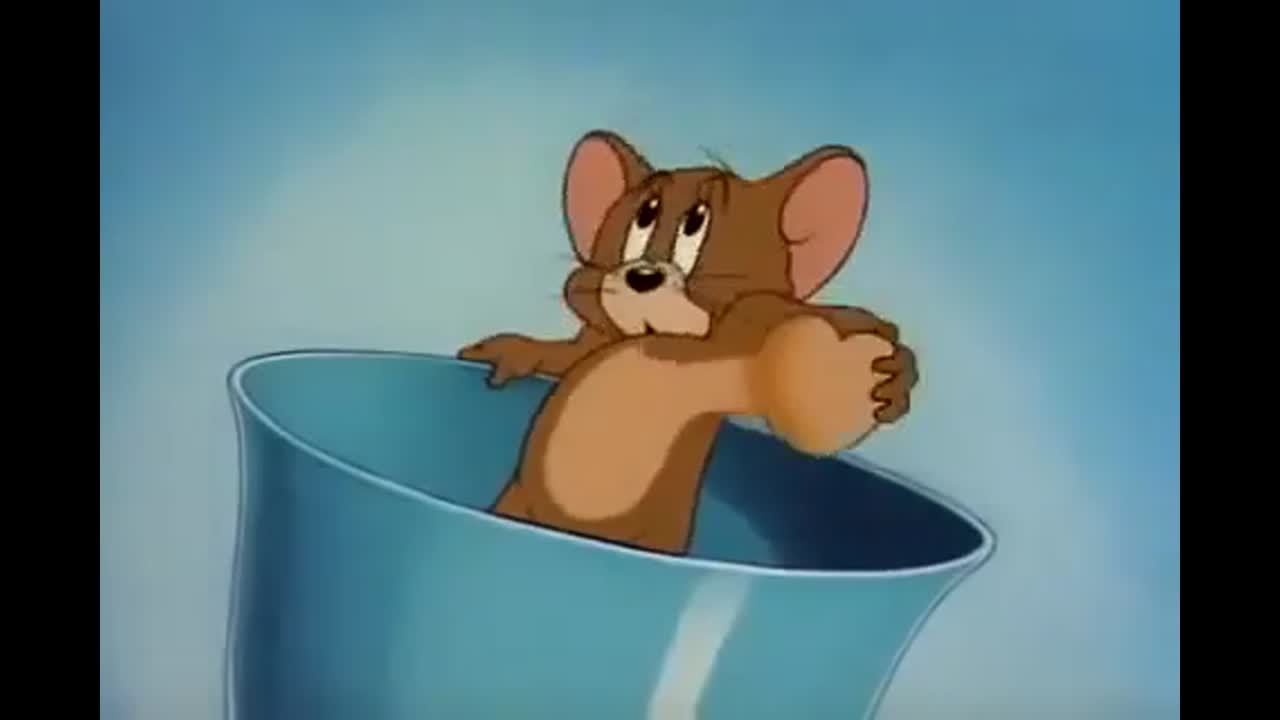
You know that specific image. The one where Tom’s chest physically expands into a massive, pulsing, bright red shape because he’s seen Toots or some other attractive feline. It’s the Tom and Jerry heart—a visual shorthand for "down bad" that has survived nearly a century of media evolution.
Cartoons aren't supposed to be realistic. We get that. But there is something visceral about the way William Hanna and Joseph Barbera decided to animate love. It wasn't a subtle blush or a shy glance. It was a physiological catastrophe. Tom’s heart literally tries to escape his ribcage. It beats with the force of a hydraulic press. Honestly, it’s kind of terrifying if you think about it too long.
The literal anatomy of a Tom and Jerry heart
The gag usually follows a strict sequence. Tom sees a girl. His eyes pop out. His jaw hits the floor—literally clattering like wood. Then comes the heart. It’s not just a symbol floating over his head; it is his actual chest cavity distorting. Sometimes it’s a single giant thumping heart. Other times, it’s a series of smaller hearts traveling up his throat.
Why does this work?
Animation historian Jerry Beck has often pointed out that the MGM shorts thrived on "exaggerated reality." In the 1940s and 50s, the "Tom and Jerry heart" was a way to bypass the censors of the Hays Code. You couldn't show certain types of physical attraction on screen, but you could show a cat’s heart beating so hard it looks like a kick drum. It communicated intense, overwhelming desire without saying a word.
The physics are wild. Usually, the heart beat is timed to the music—often a frantic, brass-heavy score by Scott Bradley. Bradley’s music didn't just play in the background; it was the heartbeat. If the heart moved, the trumpet flared. This creates a sensory loop that sticks in your brain. You don’t just see the love; you hear the frantic, rhythmic desperation of it.
It’s not just love; it’s a vibe shift
People use the Tom and Jerry heart today in ways the original animators couldn't have imagined. It’s the ultimate reaction image. When you see someone post a picture of a new designer bag, a delicious plate of pasta, or a K-pop idol, the heart-thumping Tom is the go-to response.
It represents a specific kind of "losing your cool."
In the episode "Solid Serenade" (1946), Tom brings a double bass to woo Toodles Galore. He sings "Is You Is or Is You Ain't My Baby." The heart-thumping isn't just romantic; it’s performative. He’s trying so hard. And that’s the crux of the meme. It’s about being "unabashedly extra."
There’s a nuance here that modern CGI often misses. Because the original shorts were hand-drawn on cels, the "smear frames" used to create that pulsing heart have a weight to them. You can feel the ink and paint. Modern recreations of the Tom and Jerry heart often feel too smooth, too digital. The grit of the 40s animation makes the heart feel like it has actual blood pumping through it.
The psychology of the "Awooga" moment
Tex Avery is the guy who really pioneered this "wolf-whistle" style of anatomy-breaking animation. While he didn't direct Tom and Jerry, his influence at MGM was everywhere. He turned the body into a machine of reaction.
The Tom and Jerry heart is basically a "visual scream."
Psychologically, we resonate with it because everyone has felt that internal "thump" when they’re nervous or excited. It’s an externalization of an internal sensation. It's relatable because it’s a hyper-fixation. Tom doesn't care that Jerry is about to slam his tail in a window; he is 100% focused on the object of his affection. That tunnel vision is something we’ve all experienced.
Interestingly, the heart gag isn't always successful for Tom. Usually, it’s a prelude to him getting hit with a mallet. There’s a lesson there, maybe. Extreme passion usually leads to a literal or metaphorical brick to the face.
Why Gen Z adopted a 75-year-old cat
If you spend five minutes on TikTok or X (formerly Twitter), you’ll see it. The heart-thumping cat is a staple of "stan culture."
- It transcends language barriers.
- It’s instantly recognizable even in a tiny thumbnail.
- It mocks the person using it (self-deprecating humor).
When you post that heart-thumping gif, you're saying, "I know I'm being ridiculous, and I don't care." It’s the opposite of being "cool" or "detached." It’s a full-throated embrace of being a loser for something you love.
The technical side of the thump
If you’re an animator or an artist trying to recreate this, the "timing" is everything. It’s not a steady beat. It’s "staccato."
- The Prep: The chest compresses slightly.
- The Burst: The heart expands to 3x the body width in just two frames.
- The Hold: It stays big for a fraction of a second to let the viewer register the shape.
- The Snap: It snaps back violently.
Without that "snap," it doesn't look like a Tom and Jerry heart. It just looks like a balloon inflating. The violence of the movement is what makes it funny.
The background art in these scenes is usually simplified. When Tom’s heart starts going, the world around him often blurs or fades. The animators wanted your eyes locked on that red pulse. This is a classic filmmaking technique: eliminate the noise to highlight the signal. And the signal here is "I am in love/lust and I am losing my mind."
Real-world impact and "Cartoon Heart Syndrome"
While "Cartoon Heart Syndrome" isn't a medical term, the visual has actually been used in health awareness campaigns to describe palpitations. It's that effective. People see that image and they immediately understand the feeling of a racing pulse.
We see variations of this in anime (the giant sweat drop or the popping vein) and in Disney films (the floating hearts), but nothing has the sheer physical impact of the MGM heart. It’s aggressive. It’s loud. It’s unapologetic.
In the 1992 film Tom and Jerry: The Movie, they tried to modernize the look. It didn't work as well. The stakes felt lower. There’s a specific magic in the 1940-1958 era—the "Golden Age"—where the characters felt like they were made of rubber and dynamite. When Tom's heart beats in "The Zoot Cat," you feel the wind coming off the screen.
How to use the Tom and Jerry heart in your own content
If you’re a creator, don’t just post the gif. Contextualize it. The meme works best when contrasted with something mundane.
"Me when the grocery store finally has the good sourdough back in stock" + Tom and Jerry heart.
The humor comes from the disproportionate response. A cat’s heart exploding for a piece of bread? That’s the sweet spot.
Also, look for the "pre-heart" frames. Sometimes the most hilarious part isn't the giant heart itself, but the frame right before it where Tom’s eyes are beginning to bulge. That "calm before the storm" adds a layer of comedic timing that most people overlook.
Actionable Takeaways for the Obsessed
If you want to dive deeper into this specific aesthetic or use it effectively, here is what you do.
First, go watch "Solid Serenade" and "The Zoot Cat." Don't just watch them for the plot (there isn't much). Watch the timing of the hearts. Notice how the animators use "squash and stretch" principles to make the heart feel heavy.
Second, if you're looking for the best high-res assets for memes, search for "MGM cel scans." These give you the cleanest version of the Tom and Jerry heart without the grainy compression of 2005-era YouTube rips.
Third, understand the "why." Use the heart when you want to signal "total loss of composure." It’s not for a mild "like." It’s for the "I would jump off a cliff for this" moments.
Finally, recognize that this is part of a larger history of American surrealism. We often forget that these cartoons were considered cutting-edge art. The ability to take a biological organ and turn it into a comedic prop is a feat of imagination that keeps Tom and Jerry relevant while other cartoons from the same era have faded into obscurity.
The heart keeps beating because the feeling it describes—that sudden, overwhelming "thump"—is universal. We’re all just cats with hearts too big for our chests, waiting for something to make them pop.