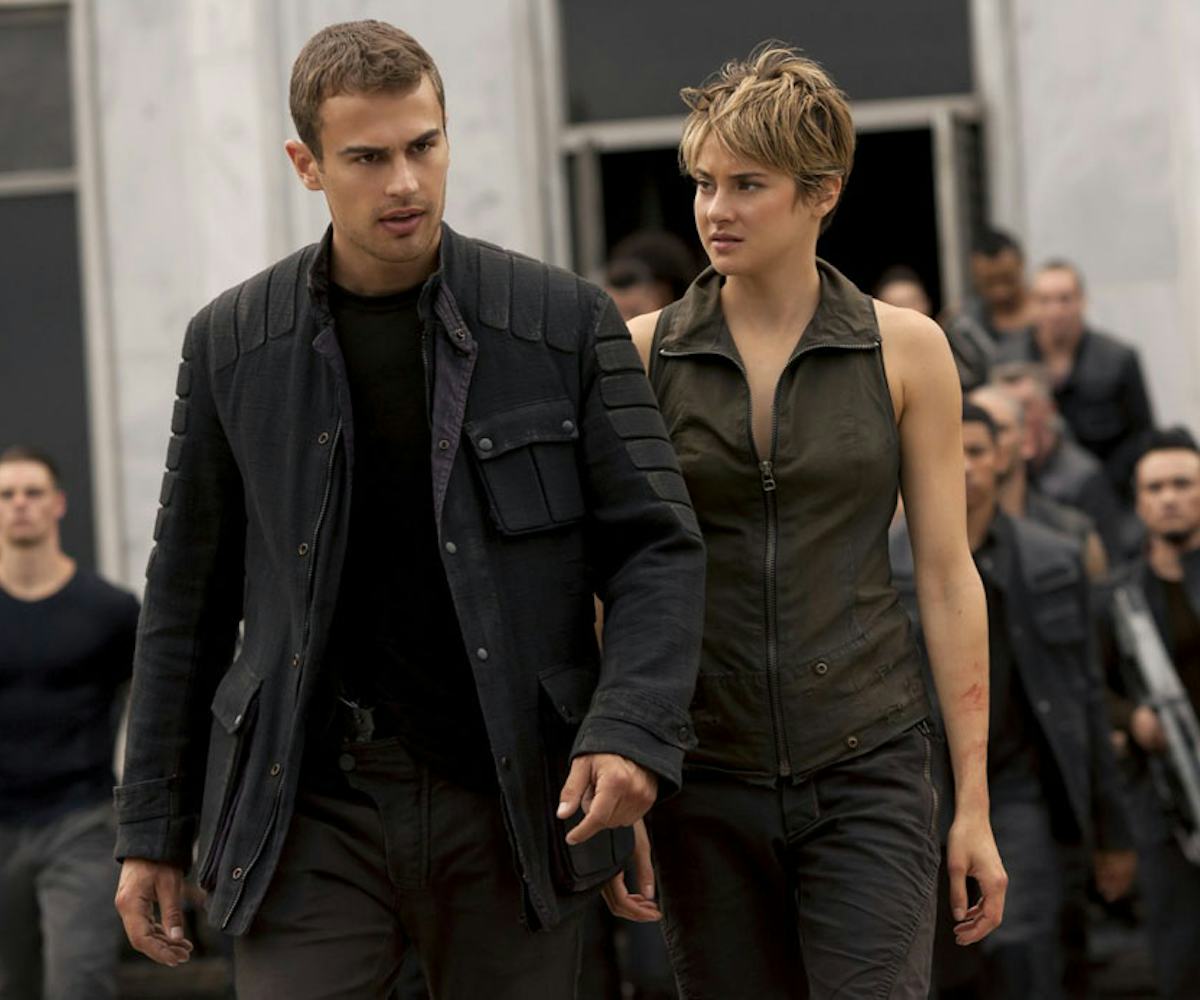
You remember the Ferris wheel. Most people do. It’s that one scene where the tension in Veronica Roth's dystopian Chicago finally snaps. But honestly, the Tris and Four kiss in Divergent wasn't just some obligatory YA romance beat tossed in to satisfy a trope. It felt earned. If you look back at the 2014 movie or the original 2011 novel, that first real moment of physical vulnerability between Beatrice "Tris" Prior and Tobias "Four" Eaton carries a weight that a lot of modern adaptations struggle to replicate.
It’s about the Dauntless chasm. It’s about the fear landscape.
Most stories rush the "first kiss" to get to the action. Divergent did the opposite. It used the action to build the kiss. When Shailene Woodley and Theo James finally locked lips on screen, it wasn't just a relief for the fans; it was a character pivot. Tris, the "Stiff" from Abnegation who never touched anyone, finally chose something for herself.
The Anatomy of the Tris and Four Kiss in Divergent
Why does this specific scene work so well? Context is everything. You have two people who are literally trained to hide their weaknesses. In the Dauntless faction, showing emotion is basically a death sentence or, at the very least, a ticket to being factionless.
The first kiss happens in Chapter 24 of the book. It’s a quiet, almost jarringly human moment after the high-octane intensity of the training simulations. In the film, the setting shifts slightly for cinematic impact, but the soul of the scene remains. They’re standing on the edge. Literally.
They aren't just attractive teenagers. They’re survivors.
Four is usually this stoic, borderline-cruel instructor. But in that moment, he’s just Tobias. He admits he’s only a "fraction" of what he wants to be. That's some heavy stuff for a YA novel. He doesn't go for a grand, sweeping gesture. It’s hesitant. It’s real. Shailene Woodley played Tris with this specific brand of awkwardness that made the chemistry feel less like a Hollywood script and more like two kids trying to figure out if they’re going to die tomorrow.
The Fear Landscape Factor
You can’t talk about their romance without talking about the fear landscape. This is where Divergent separates itself from The Hunger Games or The Maze Runner. In those series, romance is often a byproduct of the plot. In Divergent, the romance is the plot’s diagnostic tool.
When Tris enters Four’s fear landscape, she sees his most private traumas. She sees his father, Marcus Eaton. She sees the belt. She sees the claustrophobia.
Sharing a kiss after that isn't just romantic. It’s an act of massive psychological trust.
Basically, they’ve seen the worst parts of each other’s brains before they’ve even held hands. Most couples today can’t even share their phone passwords, yet these two shared their literal nightmares. That’s why the kiss feels so explosive—it’s the release of all that shared trauma.
Why the Chemistry Between Woodley and James Mattered
Let's be real for a second. Casting can ruin a book. If the actors don't have that "it" factor, the most iconic scenes from the page fall flat on the screen.
Theo James was 28 or 29 when they filmed the first movie. Shailene was around 21. There was a maturity to their interaction that bypassed the "high school crush" vibe. James brought a brooding, protective energy that never felt overbearing, while Woodley grounded Tris in a way that made her transformation from a plain Abnegation girl to a Dauntless warrior believable.
The way they filmed the Tris and Four kiss in Divergent used a lot of close-ups. Director Neil Burger focused on the hands, the breathing, the slight hesitation. It wasn't over-produced.
- The silence was louder than a soundtrack.
- The lighting was gritty, not glamorous.
- The dialogue was sparse because, frankly, what was there to say?
I've seen people argue that the movie changed too much from the book, but the "Kissing Scene" (as it's often titled in YouTube clips with millions of views) stayed true to the emotional core. It was about finding safety in a world that was literally falling apart around them.
Misconceptions About Their Relationship
A lot of people think Tris and Four were a "perfect" couple. They weren't. Honestly, they were kind of a mess.
If you re-read Insurgent and Allegiant, their relationship is defined by secrets and power struggles. The kiss in the first book/movie is the high point before the reality of war sets in. Some critics at the time, like those from The New York Times or Variety, pointed out that the romance felt like it was "distracting" from the political uprising.
But was it?
The political uprising in Divergent is fueled by identity. Tris being "Divergent" means she can’t be controlled. Her love for Four—and his love for her—is the ultimate form of being Divergent. They are choosing a person over a system. That first kiss is their first act of rebellion. It’s not just a smooch; it’s a middle finger to Jeanine Matthews and the Erudite plan for a structured, emotionless society.
The Cultural Impact of the Scene
We’re over a decade out from the initial Divergent craze. Looking back, that scene represents the peak of the YA dystopian era. It was a time when we wanted our heroes to be brave but also deeply vulnerable.
The Tris and Four kiss in Divergent became a blueprint for "enemies-to-lovers" (or at least "guarded-mentor-to-lovers") tropes that still dominate BookTok today. You can see echoes of Tobias Eaton in characters like Rhysand from A Court of Thorns and Roses or Xaden Riorson from Fourth Wing.
It’s that specific mix of:
- The "He’s mean to everyone but her" vibe.
- The high-stakes environment.
- The absolute emotional transparency.
What Actually Happened in the Book vs. The Movie
There are some technical differences that hardcore fans always bring up. In the book, the buildup is much longer. There’s a scene involving a train (obviously, it’s Dauntless) and a lot more internal monologue from Tris about her body image and her "Stiff" upbringing.
In the movie, we get more visual cues. We see the way Four looks at her during training. We see the subtle shift in his voice when he calls her "Tris" instead of "Six" or "Initiate."
One thing the movie did better? The height difference. It added to that sense of Tris being small but fierce, and Four being this massive wall of a human who finally lets his guard down. It made the physical act of the kiss feel more grounding.
Breaking Down the "First" Times
Interestingly, there are actually a few "first" moments between them that lead up to the big kiss.
First, there's the touch during the knife-throwing scene. Then there’s the Ferris wheel climb. Each of these moments is a brick in the wall. By the time they actually get to the kissing part, the audience is practically screaming at the screen. That’s good storytelling.
It’s also worth noting that the romance wasn't sexualized in a way that felt gross or exploitative. It felt like a natural progression of two lonely people finding the only other person in the world who understood what it felt like to be a "glitch in the system."
The Actionable Legacy of Tris and Four
If you're a writer or a fan of the genre, there’s a lot to learn from how this was handled.
First, don't rush the payoff. The Tris and Four kiss in Divergent works because of the 200 pages (or 60 minutes of film) that came before it. You need the tension to be unbearable.
Second, make the setting matter. If they had kissed in a boring hallway, no one would remember it. They kissed in the middle of a revolution, surrounded by the cold stone and metal of the Dauntless headquarters.
Lastly, focus on the stakes. They weren't just risking a broken heart; they were risking their lives. When the stakes are that high, a simple kiss carries the weight of a climax.
Where to Revisit the Moment
If you want to go back and analyze this yourself, I highly recommend doing a "side-by-side" comparison.
Watch the scene in the first movie (it’s usually around the 1-hour and 30-minute mark) and then read Chapter 24 of the book. Notice what's missing. Notice what was added.
In the book, Tris says: "I don't want to be a piece in their game."
In the movie, the kiss is her way of saying she’s not a piece in the game.
It’s a rare instance where the cinematic version and the literary version complement each other perfectly. Even if the later movies in the franchise lost their way a bit (we don’t talk about the Ascendant cancellation), the original Divergent remains a masterclass in building a romance that feels both inevitable and surprising.
How to Apply This to Your Own Reading or Writing
If you're looking for stories that capture this same energy, look for "High-Stakes Romance" or "Dystopian Romanticism." The key elements are always:
- Forced proximity (training together).
- Shared secrets (the Divergent status).
- A catalyst for vulnerability (the fear landscape).
When these three things align, you get a moment that sticks in the cultural consciousness for over ten years. Tris and Four weren't just a couple; they were an anomaly. And in a world that demands everyone fit into a box, being an anomaly is the most romantic thing you can be.
To truly appreciate the nuance of their dynamic, re-read the "Four" short stories by Veronica Roth. They provide a much-needed perspective on what was going through Tobias's head during that first kiss. It wasn't just attraction; it was the terrifying realization that he finally had something to lose. That realization is what makes the kiss—and the rest of their tragic, beautiful story—so unforgettable.
If you're planning a re-watch or a re-read, start with the 10th Anniversary Edition of the book for some extra insights from Roth herself on how she crafted their chemistry. Or, just pull up that Ferris wheel scene on YouTube. It still holds up. Everything about that era of YA was focused on the "Chosen One," but Divergent reminded us that even a "Chosen One" needs someone to hold onto when the world starts to burn.