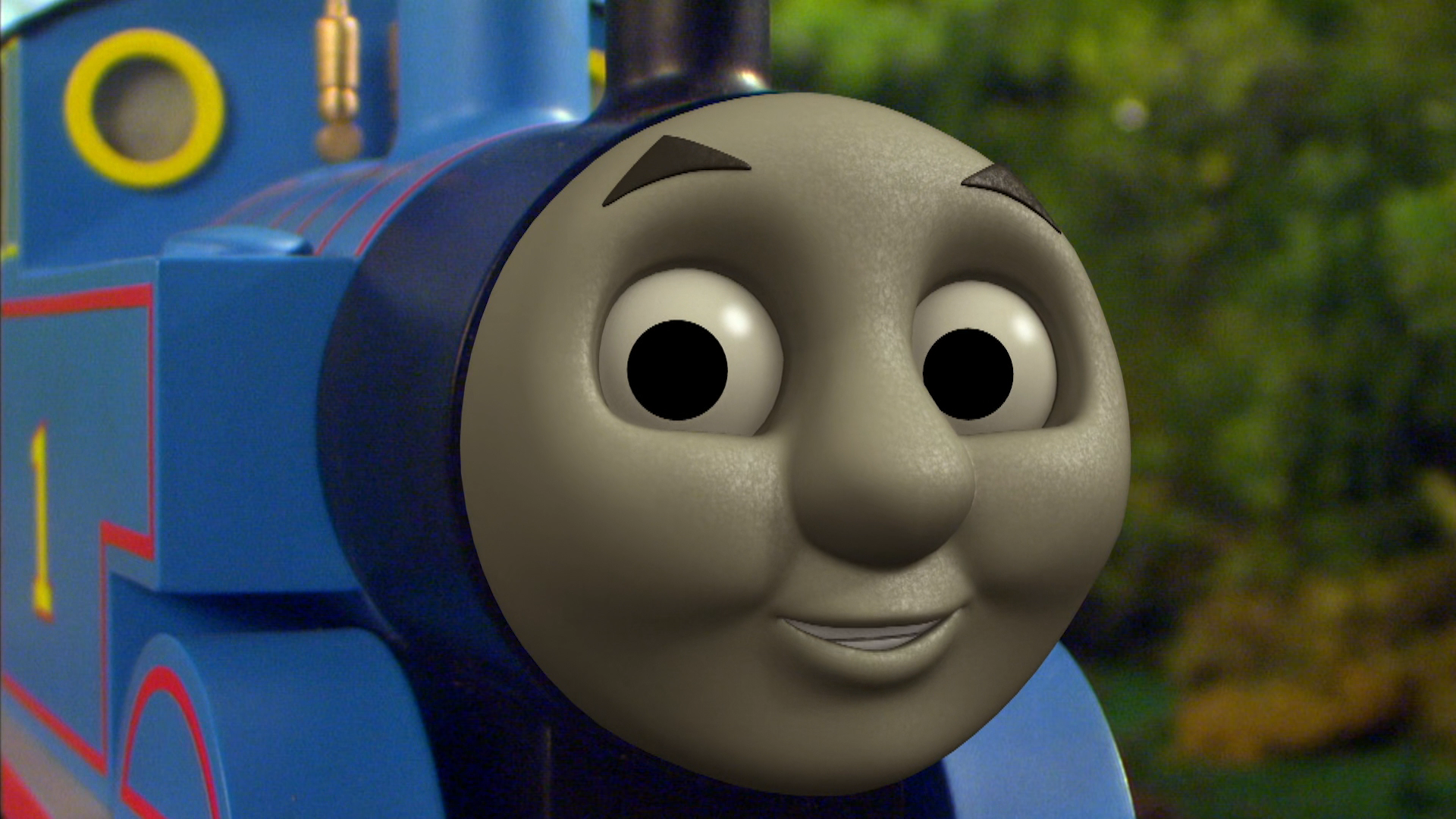
It’s been over thirty years. Seriously. If you sit down today and watch "Henry’s Forest" or "Escape," there is a weird, tactile magic in Thomas & Friends Season 3 that simply hasn't been replicated. Most people assume nostalgia is doing the heavy lifting here. They think we just miss our childhoods. But if you actually look at the production shift that happened in 1991 and 1992, you’ll see that Season 3 was the moment the show stopped being a quirky British experiment and became a cinematic powerhouse.
Britt Allcroft and Director David Mitton were taking massive risks back then.
They had just finished Tugs, a sister show about tugboats in a gritty harbor, which used incredibly sophisticated practical effects. When they returned to Sodor for the third outing, they brought all that technical wizardry with them. It wasn't just about trains on tracks anymore. They were using moving cameras, complex lighting rigs, and chemical smoke that actually looked heavy. It felt real because it was real.
The Massive Shift in Storytelling
Before this, the show stuck strictly to Reverend W. Awdry’s original Railway Series books. It was a bit rigid. Season 3 changed the game by introducing stories not written by the Reverend, which actually caused a bit of a stir at the time. Allcroft and Mitton wanted more action. They wanted "Escape," where Douglas saves Oliver from the scrapyard in a dark, moody environment that felt like a genuine thriller.
The Railway Series purists might have grumbled, but kids in the early 90s were captivated.
The episode "Henry's Forest" is the perfect example of this era's soul. It has almost no plot. Henry likes trees. A storm knocks them down. Toby brings new ones. That’s basically it. Yet, the visuals of the sunlight filtering through the model trees—real moss and lichen were often used—created an atmosphere that modern CGI literally cannot touch. It was slow. It was meditative. It trusted the audience to just feel the environment.
Why the Models Felt Alive
Have you ever looked closely at the faces? In Thomas & Friends Season 3, the production team was using a mix of traditional resin faces and the iconic "moving eye" mechanism. A crew member would literally reach behind the model with a small joystick to move the eyes between takes. This gave the engines a soulful, slightly weary look.
The scale was also impressive. Most of the engines were Gauge 1, which meant they were large enough to have real weight. When they moved, they didn't zip around like cartoons; they lumbered. They had momentum. You could see the water in the landscape—real water, often treated with chemicals to make it look "to scale" in terms of splash size—rippling as they passed.
The George Carlin Factor
For many of us in North America, Season 3 was the definitive introduction to George Carlin as the narrator. Replacing Ringo Starr was no easy feat. Ringo was the gentle grandfather; Carlin was the storyteller who gave every engine a distinct, slightly cynical edge.
Carlin’s delivery during the more intense moments of Thomas & Friends Season 3 added a layer of gravitas. When Oliver is being stalked by the scrap merchants, Carlin doesn't talk down to the kids. He makes it sound dangerous. It’s a huge reason why the show transitioned so well into the US market via Shining Time Station.
The narration wasn't just reading a book. It was performance art.
Technical Milestones Most People Miss
The lighting in this season was a massive jump forward. If you watch Season 1, the lighting is very "flat" and studio-like. By Season 3, the crew was using colored gels and localized spots to create sunset scenes and murky night shots.
- They used real fire for certain "disaster" scenes.
- The miniature work expanded to include massive bridges and the "Mountain Line."
- Scale-accurate steam was achieved through a variety of methods, including dry ice and specialized smoke generators hidden inside the funnels.
The Scrapyard and the Darker Tones
There is a sequence in "Escape" that honestly scarred a few of us. The sight of those faceless, rusted engine tenders in the background of the scrap yards was chilling. This was the peak of the show’s "Industrial Gothic" phase.
Mitton and his team understood that for the "Really Useful" mantra to matter, there had to be a consequence for being useless. The threat of the furnace was real. That tension is what makes the rescue of Oliver so satisfying. It isn't just a toy train moving; it's a character escaping death.
Honestly, modern kids' shows are often too bright. Too safe. Season 3 wasn't afraid of shadows.
How to Revisit the Season Today
If you're going back to watch Thomas & Friends Season 3, try to find the original 4:3 aspect ratio versions if possible. Many modern "remasters" on YouTube or streaming services crop the image to 16:9, which cuts off the top of the funnels and the bottom of the wheels. You lose the scale.
Look for the details in the background. Look at the tiny workmen, the hand-painted posters on the station walls, and the way the "snow" (usually salt or white foam) piles up on the buffers.
Actionable Steps for Collectors and Fans
If this trip down memory lane has sparked an interest in the physical history of the show, here is how you can engage with it:
- Seek out the "Restored" Fan Projects: There are incredible fan communities (like those on Twitter and specialized forums) that have used AI upscaling and original film scans to restore Season 3 to its original broadcast glory without the awkward cropping.
- Research the Props: Many of the original models from this era ended up in the hands of private collectors or at the Nitrogen Studios offices. Sites like the Sodor Island Fansite have tracked where many of these historical pieces are today.
- Compare the Storylines: Read the original Railway Series books alongside the Season 3 episodes. Notice how the writers expanded on Awdry’s work—sometimes for the better, sometimes creating logic gaps that fans still argue about today.
- Check Out the Music: Mike O'Donnell and Junior Campbell were at their peak here. The "Percy’s Seaside Trip" theme and the "Edward" leitmotifs are masterclasses in synth-based children's music.
The magic of this specific era of television lies in the fact that it wasn't perfect. You can occasionally see a wire. You can see the slight stutter of a model on a cold track. But that imperfection is exactly what makes it feel human. It’s a handmade world. In an era of pixel-perfect animation, the thumbprints on the clay and the oil on the tracks of Season 3 are a reminder of a time when television was built by hand, one miniature brick at a time.