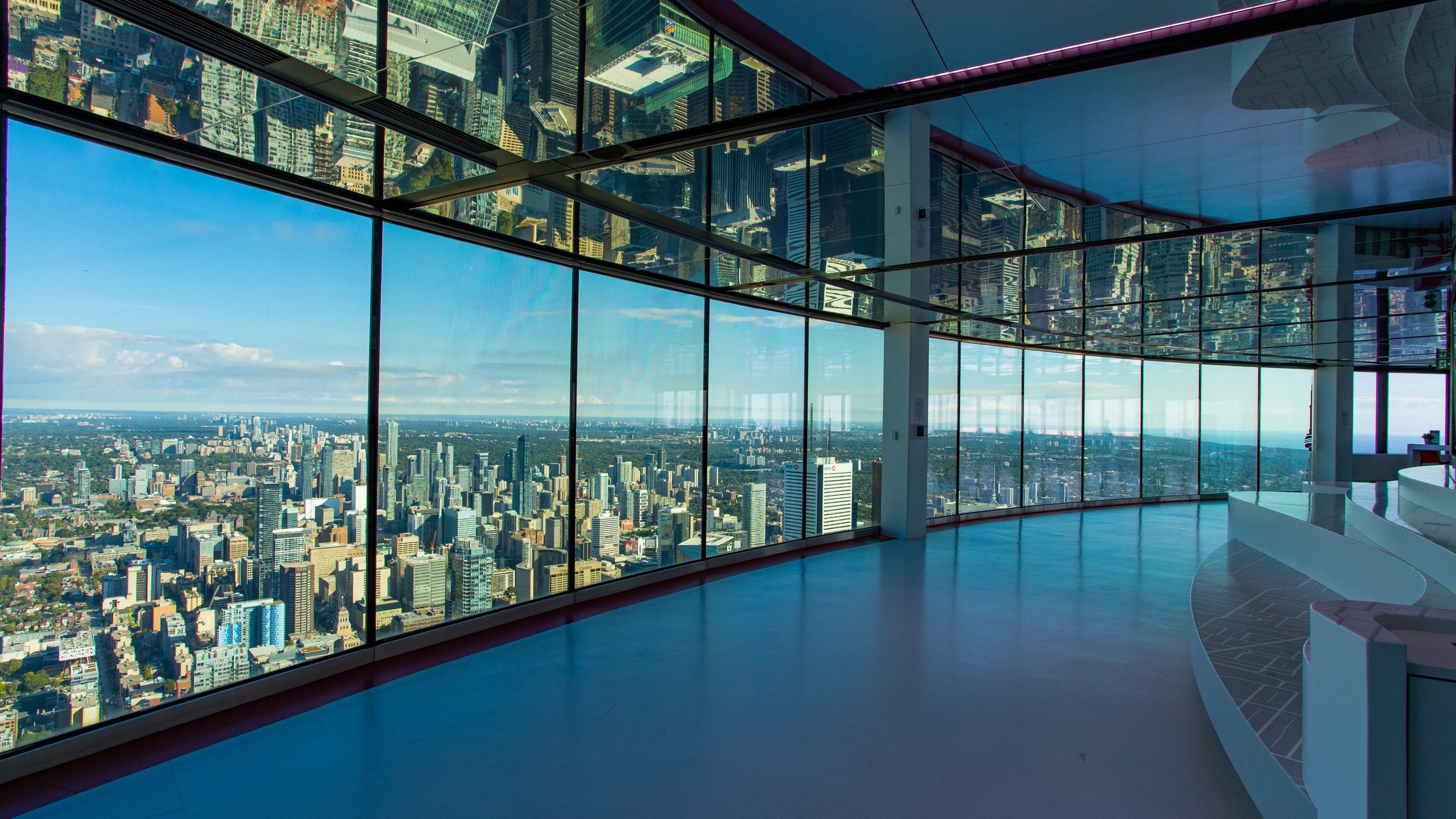
If you’ve ever stood at the base of the concrete giant in downtown Toronto, you’ve probably felt that slight dizzy spell looking up. It’s huge. It's 1,815 feet of sheer engineering ego. But honestly, why was the CN tower built in the first place? Most people assume it was just a "mine is bigger than yours" competition between architects or a flashy tourist trap designed to sell overpriced dinner reservations at 1,100 feet in the air.
That's not it. Not even close.
The tower wasn't a vanity project. It was a desperate solution to a massive technological headache that was literally silencing the city of Toronto in the late 1960s. Toronto was booming. Skyscrapers were shooting up like weeds in the downtown core—specifically the massive bank towers of the Financial District. While these buildings were great for the economy, they were a total disaster for telecommunications.
Basically, the very buildings that signaled Toronto's growth were killing its ability to communicate.
The Great Signal Blackout of the 1960s
Imagine it's 1970. You're trying to watch the hockey game on your brand-new color TV. Suddenly, the picture turns into a snowy mess or starts ghosting so badly you can't tell the puck from the referee. This was the reality for thousands of people living in the GTA.
The problem was simple physics.
Television and radio signals travel in straight lines. As the Toronto skyline grew taller, buildings like the First Canadian Place (which held the crown for height back then) started reflecting these signals. The waves would bounce off the steel and glass, creating "ghosting" on TV screens and dropping radio frequencies altogether. The existing transmission towers, which were mostly located on top of shorter buildings or further out in the suburbs, just couldn't clear the new height of the downtown core.
Canadian National (CN) realized they had a problem, but also a massive opportunity. They needed a way to get their microwave and TV transmitters higher than anything else—not just for the 1970s, but for the next fifty years of growth.
They needed a needle.
More Than Just an Antenna: The Engineering Nightmare
Building something that tall in a city that sits on a massive bed of shale near a giant lake isn't exactly easy. They started digging in 1973. They hauled away 56,000 metric tonnes of earth.
You’ve got to appreciate the sheer grit of the "Cowan’s Crew," the nickname for the workers who climbed the tower every day. This wasn't some automated process. It was a 24-hour-a-day operation for 40 months. They used a "slipform" technique, which is basically a giant ring of poured concrete that slowly moves upward. It’s a bit like squeezing toothpaste out of a tube, but the tube is 500 meters tall and weighs millions of pounds.
Accuracy was everything. If the tower was off by even a few inches at the base, it would be leaning like the Tower of Pisa by the time it reached the top. Using giant plumb bobs—basically heavy weights on long strings—they kept the structure within 1.1 inches of being perfectly vertical.
That is insane.
When people ask why was the CN Tower built so high, the answer is "line of sight." To guarantee that signals could reach all the way to the Niagara Peninsula and across Lake Ontario without hitting a single obstacle, they had to aim for the clouds.
The SkyPod and the Tourism Pivot
While the primary goal was 100% industrial, the designers weren't stupid. They knew that if you build the tallest structure in the world (which it was from 1975 until 2007), people are going to want to go to the top.
The inclusion of the "Space Deck" (now called the SkyPod) and the revolving restaurant wasn't part of the original "let's fix the TV signals" brief. It was a way to make the project pay for itself. The tower cost about $63 million CAD to build in 1976. Adjusted for inflation, that’s hundreds of millions today. You don't make that back just by leasing space to FM radio stations.
You make it back by selling the "World's Highest" experience.
Is It Still Relevant?
You might think that in the age of fiber optics and 5G satellites, the CN Tower is just a giant concrete relic.
Wrong.
It’s still one of the most important telecommunications hubs in North America. Look at the very top—that white needle isn't just for show. It houses over 30 different transmitters for TV, FM radio, and cellular providers. It handles emergency service frequencies for the police and fire departments.
If the CN Tower disappeared tomorrow, half of Southern Ontario would lose their emergency communication lines and over-the-air broadcasting. It’s a functional piece of infrastructure disguised as a landmark.
What Most People Get Wrong About the Build
There’s a common myth that the tower was built to be a "monument to Canadian unity." While the government certainly used it for PR later on, the motivation was purely functional. It was a utility project that happened to become an icon.
Another misconception? The "Glass Floor." When it opened in 1994, people thought it was a gimmick. In reality, it was a psychological experiment in architecture. It proved that people crave that "edge of the world" feeling. That one addition changed how observation decks were designed globally.
Practical Insights for Your Next Visit
If you’re heading there to see the result of this massive engineering feat, don't just go for the view. Look at the structure itself.
- Check the Weather: If it’s windy, the tower is designed to sway. At the level of the SkyPod, it can move up to a meter. It’s terrifying, but perfectly safe.
- The Lightning Factor: The tower is a giant lightning rod. It gets hit about 75 to 100 times a year. If you're there during a storm, you’re in the safest place in the city, but the sound is like a cannon going off.
- The "Heli-Top" Story: To get the final piece of the antenna up, they used a giant Sikorsky helicopter named "Olga." It was a high-stakes aerial dance that almost ended in disaster several times due to shifting winds.
The reason why was the CN Tower built boils down to a simple truth: Toronto grew too fast for its own signals to keep up. It was a solution to a technical glitch that ended up defining a national skyline.
Next Steps for Your Trip:
- Book the EdgeWalk if you want to feel the actual engineering of the exterior; it's the only way to truly appreciate the scale without a window in your way.
- Visit the base level and look for the time capsule buried in the wall, which is set to be opened in 2076—it contains local history from the year the tower was completed.
- Download a signal-meter app on your phone while you're at the top; you'll see the sheer density of frequencies passing through that concrete needle in real-time.
The CN Tower isn't just a photo op. It's a massive, 118-million-pound antenna that keeps Toronto's heart beating. It just happens to have a really good view.